Voyager 1 went quiet for two days. NASA got it back, and still wants to know why
- NASA's antennas heard nothing from Voyager 1 at two scheduled checks on 18 and 19 October. The signal came back on 20 October, about 48 hours later.
- Engineers found that one group of thrusters had switched off and the backups took over by themselves. The cause is still under investigation.
- On 18 November, the 49-year-old probe will be one light-day from Earth: a message will take a full day to reach it.
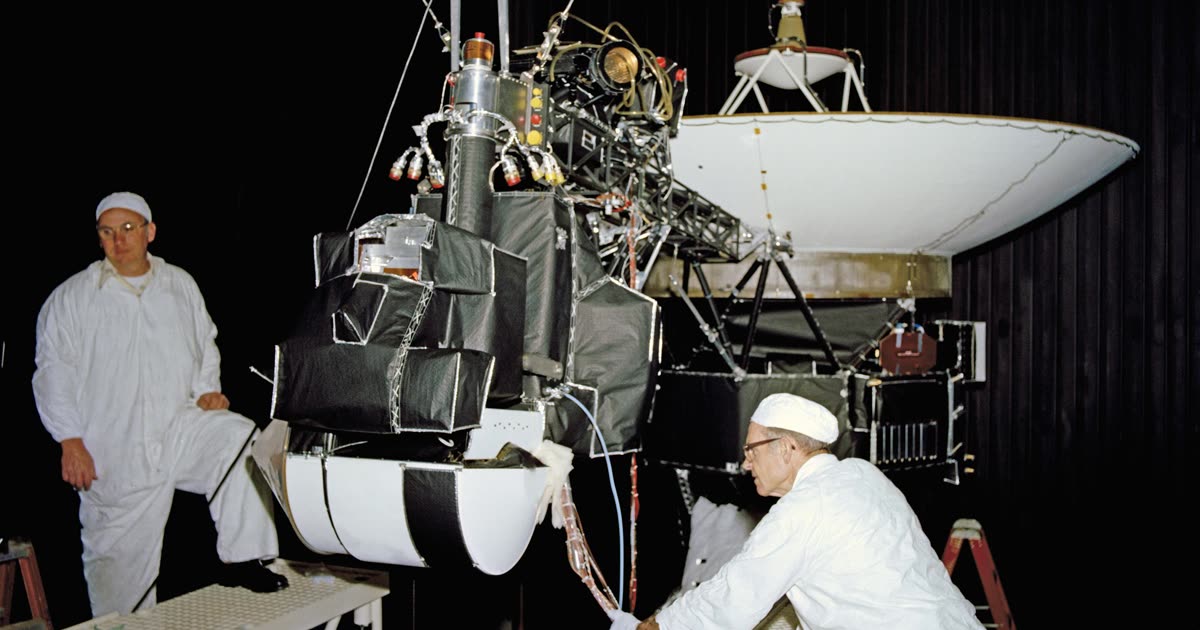
On 18 October, NASA’s giant dish antennas listened for Voyager 1 at the scheduled time and heard nothing. A day later, they tried again. Still nothing. For a spacecraft 24 billion kilometres away, launched in 1977, silence is never a small thing.
Then, on 20 October, the signal came back. Voyager 1 lost contact for about 48 hours and recovered on its own, before the team had sent a single command to fix it. NASA’s Jet Propulsion Laboratory (JPL) shared the news on 29 October. So, has Voyager 1 lost contact for good? No. The probe is safe for now, but nobody yet knows exactly why it went quiet.
How Voyager 1 lost contact, then came back
NASA talks to Voyager 1 through the Deep Space Network, large antennas at three sites around the world. JPL says the network could not detect the probe’s radio signal during two scheduled attempts, 24 hours apart, on 18 and 19 October. The Voyager 1 signal reappeared on 20 October, and the team has kept contact since.
So far, engineers have one clue. A group of thrusters, the small jets that keep the spacecraft pointed the right way, went offline, and their backups switched on. The spacecraft is programmed to make that swap by itself if its computers sense something wrong. NASA calls this fault protection: the probe puts itself into a safe, stable state and pauses normal work, giving people on Earth time to look. Think of a phone that restarts in safe mode after a crash.
“This is the first time we’ve seen the spacecraft do something like this, but we are also at a point in the mission where we have to expect the unexpected,” said Kareem Badaruddin, Voyager mission manager at JPL.
A power fix came first, and the cause is still open
The pause came weeks after good news. In early September, engineers switched off three devices on Voyager 1 and replaced them with three lower-power versions, all at once. These devices help keep the spacecraft warm, so the team had to swap them together to keep heat balanced. The team calls it the “Big Bang”. It was done about six weeks after the same swap on Voyager 2.
Both Voyagers run on generators that turn heat from decaying plutonium into electricity, and each loses about 4 watts a year. The mission launched with 10 dedicated science instruments, and power limits have already forced the team to turn off two of them in recent years. JPL says that without the Big Bang, another instrument would have had to go as early as summer 2027.
What JPL does not say is just as important. It has not said which thrusters went offline or why, and it does not link the Big Bang to the signal loss.
Why 18 November is a date to put in your diary
On 18 November, Voyager 1 will be 16.09 billion miles (25.89 billion km) from Earth: one light-day, the distance light travels in a day. A radio message will take 24 hours to arrive, and the reply another 24.
“If you want to say ‘hello’ to Voyager, you send your message and then you go home and you wait two days before you finally get a response,” said Suzanne Dodd, Voyager project manager at JPL. Nothing changes on board that day. The milestone is a measure of distance, and of how long one machine has kept working.
Curious about the Voyager 1 distance from Earth? NASA’s light-day explainer and its “Where are Voyager 1 and 2 now?” page are good places to follow along. Remember, too, that the Voyagers are the only spacecraft to study interstellar space directly.
Calm handling matters more than the scare
The good news is real. The spacecraft appears to have done what its designers built it to do: it sensed a problem, protected itself and waited. The signal returned before the team had to send any commands. In our reading, that is a quiet lesson for anyone running old, precious systems: good safety design pays off decades later.
The harder truth is also real. A fault the team has never seen before, on a probe losing power every year, is a reminder that the end will come. The likelier path is more surprises like this one, each handled carefully, until the power runs out. Other long-lived missions face hard moments too: NASA’s Swift observatory has ended its work, and NASA is weighing a Hubble reboost to buy more time.
On balance, this is a story about resilience, not decline. A 49-year-old machine had a bad two days and recovered without help.
The next update to watch is JPL’s answer on the thrusters. Then, on 18 November, a day-long journey for every hello.
Sources (4): every key fact checked against at least two
Related stories
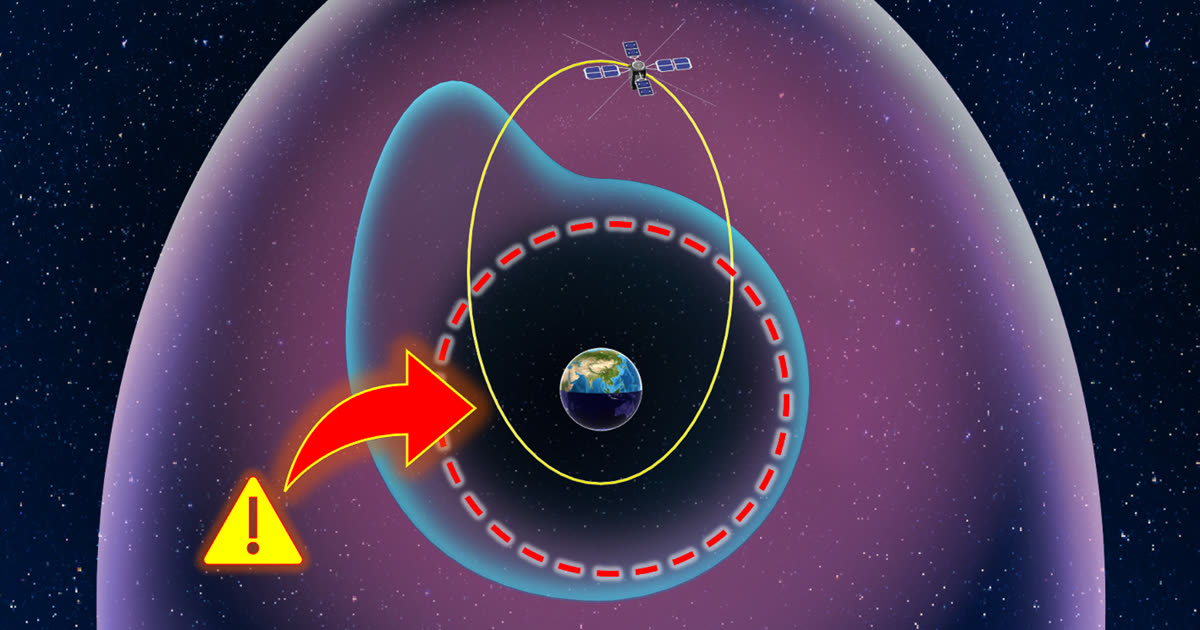
The May 2024 solar storm broke through Earth's 'impenetrable barrier' in space, a new study finds
A new study finds the May 2024 solar storm made very fast electrons inside Earth's impenetrable barrier. What it means for satellites and space weather.
One dot becomes two: ESA's Hera sees the asteroid pair NASA's DART hit
The Hera mission has seen Didymos and Dimorphos as two separate asteroids for the first time. Here is what ESA found and what comes on 25 November.
India's NVS-03 satellite clears the step where its sister NVS-02 failed
ISRO's NVS-03 satellite fired its engine for 36 minutes and is healthy, passing the step where NVS-02 failed. Here is what it means for NavIC.