NASA's Swift observatory ends its 22-year hunt for the universe's biggest explosions
- NASA's Swift observatory made its last observation on 20 October. It now orbits below 275 km, where air drag stops it pointing steadily.
- Built for a two-year mission, it worked for almost 22 years, catching more than 2,000 gamma-ray bursts. A robotic rescue failed in August.
- Swift should fall back into the atmosphere within weeks. Its 12-terabyte archive stays free for anyone, but no ready replacement is named.
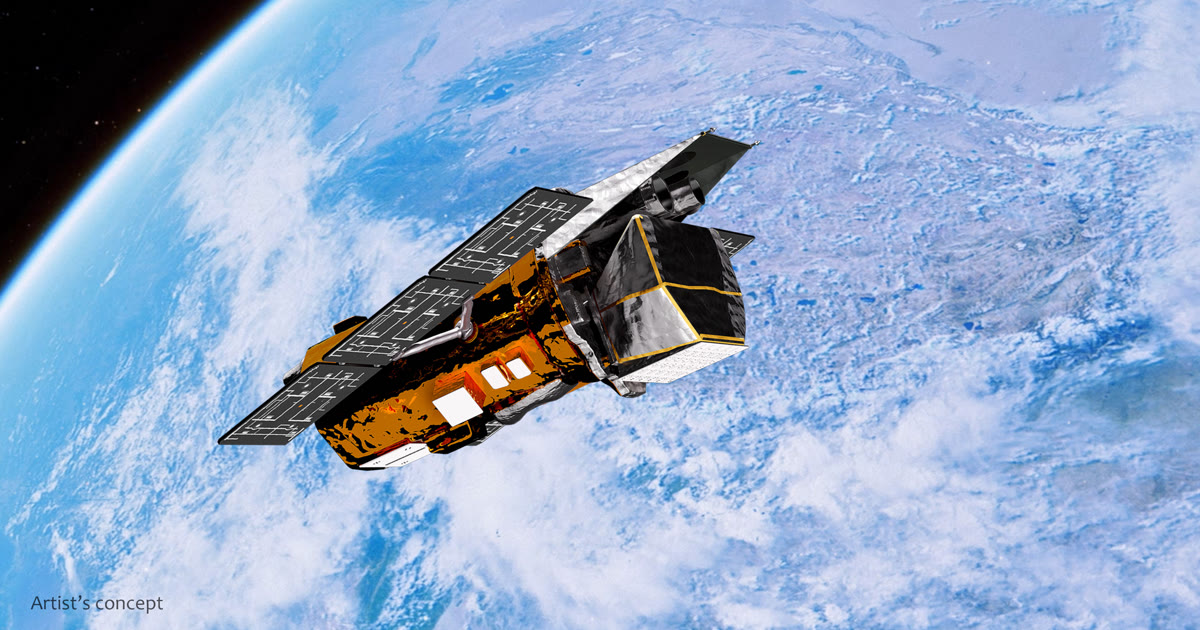
Some of the brightest flashes in the universe last less than a second. For almost 22 years, one small satellite caught them before they faded. On 20 October, the NASA Swift observatory made its last observation, and NASA announced the end of its science mission three days later.
Swift was designed to work for two years and lasted more than ten times as long. Its end matters because of one job it did best: turning to a cosmic explosion within about a minute and telling other telescopes where to look.
Too low to hold steady, and falling
The problem is height. Swift now orbits less than 275 kilometres (171 miles) above Earth. At that height the thin upper air drags on the spacecraft, and NASA says this stops its telescopes from holding steady on their targets. NASA expects it to fall back into the atmosphere “in the next few weeks”, without giving a date.
In September 2025 NASA paid Katalyst Space of Flagstaff, Arizona, US$30 million to build a robotic spacecraft called LINK that would grab Swift and lift it higher. LINK launched in July 2026 on a Northrop Grumman Pegasus XL rocket. On 18 August, NASA said an ongoing problem with LINK’s attitude control (the system that points and steadies a spacecraft) meant it would not capture or boost Swift. NASA adds that solar storms had made Swift sink faster than expected.
Two decades of catching flashes in under a minute
Swift launched on 20 November 2004. Its main target was the gamma-ray burst, the most powerful kind of cosmic explosion. Before Swift, these flashes usually faded before big telescopes could find them.
Swift had to find each burst, send its position to other observatories, and then swing its own telescopes to the spot before the afterglow faded. “This typically took Swift about a minute to do,” said S. Bradley Cenko, the mission’s principal investigator at NASA Goddard.
NASA counts more than 2,000 gamma-ray bursts, more than 1,400 supernovae (exploding stars), stars torn apart by black holes, comets and asteroids. Swift data has fed about 7,000 published scientific papers.
One moment stands out. In May 2005 Swift caught a burst that lasted just 0.03 seconds and turned fast enough to collect 11 X-ray particles of light from it. It was the first short burst seen with an afterglow, supporting the idea that short bursts come from two neutron stars (the crushed cores of dead stars) crashing together. In 2018 NASA renamed the mission after Neil Gehrels, its first principal investigator, after his death.
The gap Swift leaves behind
NASA has not named a replacement. Shawn Domagal-Goldman, director of NASA’s Astrophysics Division, said the agency is exploring how to “use and augment” its existing space telescopes. It is also looking at fast commercial options and new missions.
In our reading, that is an honest answer, but not yet a plan. Fast follow-up matters more than ever now that gravitational-wave detectors can hear neutron stars collide. Those detectors give only a rough patch of sky, and a quick-turning telescope helps find the flash itself. Until something fills that role, some chances may be missed.
What the Swift archive means for students and sky-watchers
Swift’s work does not vanish with it. Its archive holds nearly 22 years of measurements and more than 1.5 million images, about 12 terabytes in all. NASA says it is free for anyone. A student, a teacher or a curious amateur anywhere in the world can still explore it. And if you want a mission that is just starting rather than ending, Japan’s MMX probe to Mars’ moon Phobos is now on its way.
As for the Swift observatory reentry, NASA has not given a date or place. In practice, trackers narrow the window only in the final days, so watch NASA’s Swift pages.
Why the NASA Swift observatory was still good value
On balance, Swift is the kind of mission that justifies public science spending. A two-year plan became 22 years of discoveries, with the data kept open. Even the US$30 million rescue, small next to the cost of a new observatory, was a reasonable bet that simply did not work.
The harder lesson, in our view, is about design. Swift had no engine of its own, so once the air began pulling it down, only an outside rescue could help. And while NASA is busy with bigger bets, like its new Artemis plan for a 2028 Moon landing, quick-response science needs a clear plan of its own.
Swift’s telescopes have gone quiet. The real test now is whether the next quick flash in the sky still finds someone ready to look.
Sources (6): every key fact checked against at least two
- NASA: NASA's Swift Mission Ends, Leaves Behind Scientific Bonanza (Francis Reddy, 23 October 2026)
- NASA: Swift Boost Mission, mission update (18 August 2026)
- NASA: NASA Awards Company to Attempt Swift Spacecraft Orbit Boost (24 September 2025)
- Martin Cid Magazine: NASA's Swift telescope saw 2,000 gamma-ray bursts and will now fall to Earth (Peter Finch, 24 October 2026)
- gagadget: Swift's legacy: NASA ends 22-year mission of gamma-ray burst hunter
- CNN: Mission to save NASA's falling space observatory fails (19 August 2026)
Related stories
Wind turbines have killed about 18.7 million US bats since 1981, USGS-led study estimates
Wind turbines killing bats: a USGS-led study estimates 18.7 million US bat deaths since 1981, and shows how design, siting and slower blades can cut them.
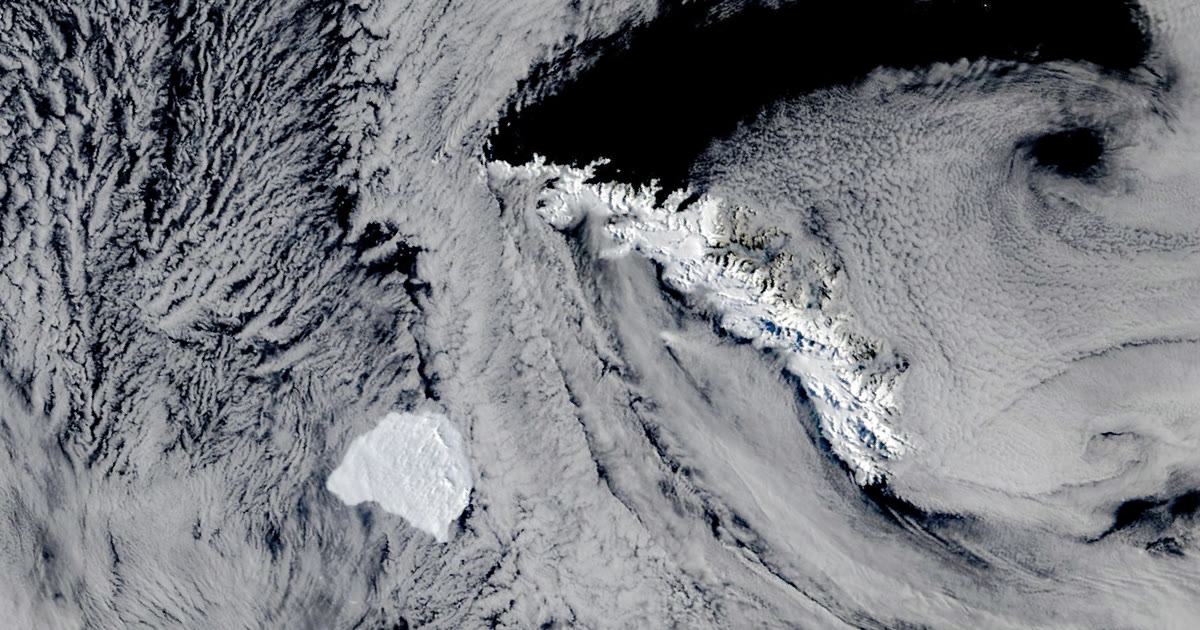
Iceberg A-81, a slab of Antarctic ice the size of a city, slows at the edge of South Georgia
A city-sized iceberg, A-81, has slowed off South Georgia after a 2,300 km drift. What satellites show, why sizes differ, and what is still unknown.

OpenAI says its AI disproved the Exponential Time Hypothesis, and two of the rule's authors will check it
Exponential Time Hypothesis: OpenAI says its AI proved the famous computing rule false. Experts, two of them its authors, are checking. What it means.