Power grids dip slightly at the start of every minute. Batteries checking themselves are the reason
- Power grids on five continents show a tiny, regular dip in frequency at the start of every minute. For years, nobody knew why.
- A Nature Energy study led by Forschungszentrum Jülich, out on 30 October, traces it to big batteries running clock-timed self-checks at once.
- The dip is not a danger to the grid today, the team says. A simple fix exists: let each device check at a random time.
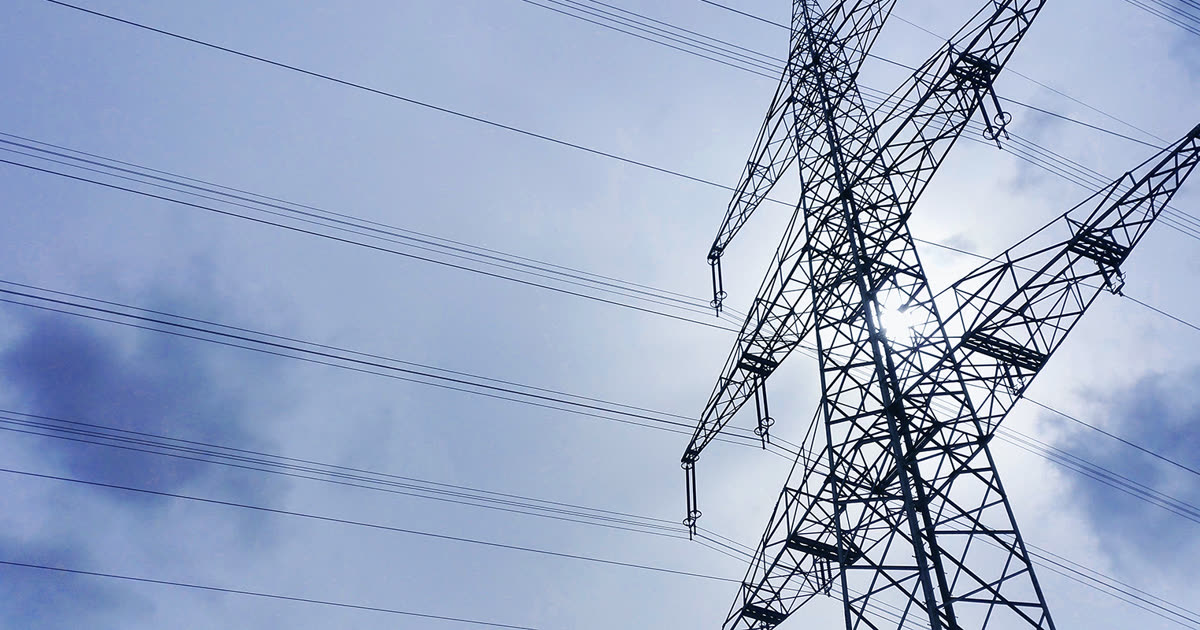
For several years, TenneT, Germany’s largest transmission grid operator, saw the same small mark in its data. At the start of every minute, the grid’s frequency dipped a little. Then it recovered. Sixty seconds later, it happened again.
Now there is an answer. A study published in the journal Nature Energy on 30 October 2026 shows that this one-minute beat appears in power grids on five continents. The cause is not a power station or the weather. It is software: many large battery systems run a short self-check on the clock, and they all do it at the same moment.
Power grid frequency, the grid’s heartbeat, in plain words
What is grid frequency? Electricity in your wall socket swings back and forth many times a second. In Europe, India, the UAE and much of Asia and Africa, the target is 50 times a second (50 hertz). In the Americas and parts of Asia it is 60. When people use more power than plants are making, the power grid frequency drops a little. When they use less, it rises. Grid operators watch this number all day, because it shows whether supply and demand are in balance.
Small wobbles are normal. This one was strange because it came precisely every minute, like a clock.
How Jülich’s team traced the beat to batteries
Professor Dirk Witthaut of Forschungszentrum Jülich, a large German research centre, led the team, with the University of Cologne and the Karlsruhe Institute of Technology. “It really was years of detective work,” Witthaut said. “It quickly became clear to us that the cause must be something controlled by the clock.”
The researchers placed measuring equipment at 80 points on Jülich’s own campus. The one-minute pattern showed up exactly where large battery systems keep power running during an outage, the team says. These units check their state of charge once a minute, and that check draws a short burst of power. “The observed effect can only be produced if many devices are consuming electricity at the same time,” Witthaut said.
The paper names the main suspects as uninterruptible power supplies (UPS, the battery boxes that keep computers and servers on when the mains fails) and battery energy storage systems. Their clocks are synchronised, so the demand peaks line up and add together.
Harmless today, but growing in several grids
The Jülich team says the dips “were not critical to grid security”. Your lights are not at risk.
The concern is the trend. The paper says the size of the pattern has grown in several grids in recent years. The sudden demand makes hydropower turbines adjust each time, which adds wear, and it has pushed some operators towards stricter control rules. In Ireland, where data centres with large battery systems use about a fifth of the country’s electricity, the one-minute signal became four times stronger between 2016 and 2021, the researchers say.
There is no binding standard for when such checks should run, according to the release. Witthaut suspects many makers simply chose 60 seconds. He says other devices, such as air-conditioning systems, heat pumps and washing machines, cannot be ruled out, though they have not been shown to play a part.
If you own a backup battery, what this means for you
You don’t need to unplug anything. The team measured large systems; home units have not been shown to cause it. Still, a small software choice, copied into thousands of devices, can now be seen across a whole continent.
That matters as battery storage on the grid keeps growing, and as AI data centres add huge battery banks. Tech firms are signing deals to power them, such as Microsoft’s 20-year power deal for its Indiana AI campus. In our reading, each new site could add to this beat unless its controls are built with the grid in mind.
A simple fix that depends on many makers agreeing
Careful measurement solved a long mystery, and the remedy is cheap. “Distribute the checks randomly, rather than always starting them at the same time,” Witthaut suggests. In a News & Views piece for the same journal, Florian Dörfler of ETH Zürich describes the devices as acting “in unison” without meaning to.
The harder part is coordination. In our reading, a fix like this usually needs a push from grid rules or industry standards, because no single maker gains much by changing alone. Power grid frequency stability has always been a physical engineering task. On balance, this study is a calm, early warning that it is now a software task too.
The next step to watch is whether battery makers and grid operators write random timing into their rules. If they do, the grid’s extra beat may simply fade away.
Sources (3): every key fact checked against at least two
- Nature Energy: One-minute frequency disturbances from unintended synchronization in cyber–physical power systems (Hartmann et al., 30 Oct 2026)
- Forschungszentrum Jülich: Mystery of 60-second fluctuations in power grids solved (30 Oct 2026)
- Nature Energy News & Views: An extra beat every minute (Florian Dörfler, ETH Zürich, 30 Oct 2026)
Related stories
The May 2024 solar storm broke through Earth's 'impenetrable barrier' in space, a new study finds
A new study finds the May 2024 solar storm made very fast electrons inside Earth's impenetrable barrier. What it means for satellites and space weather.
One dot becomes two: ESA's Hera sees the asteroid pair NASA's DART hit
The Hera mission has seen Didymos and Dimorphos as two separate asteroids for the first time. Here is what ESA found and what comes on 25 November.
India's NVS-03 satellite clears the step where its sister NVS-02 failed
ISRO's NVS-03 satellite fired its engine for 36 minutes and is healthy, passing the step where NVS-02 failed. Here is what it means for NavIC.