NASA Moon Base: eight companies can bid for up to $10bn of lander work, and a rover reuses Mars parts
- Eight companies, including SpaceX and Blue Origin, can now compete for NASA Moon deliveries under a 10-year contract worth up to $10bn.
- NASA will also build PROMISE, a six-wheeled, nuclear-powered rover made from spare Curiosity and Perseverance parts, for a late-2028 launch.
- Most of the $10bn is a ceiling, not money paid out. Future budgets and landers that work will decide how much of the plan happens.
- $10bnCeiling of the new CLPS 2 contract8 companies, over 10 years
- $4.2bnNew value of the first CLPS contractRaised from $2.6bn
- $1.3bnLaunch and in-space task ordersArrow, Blue Origin, Impulse Space
- Late 2028PROMISE rover launch target18-month mission at the South Pole
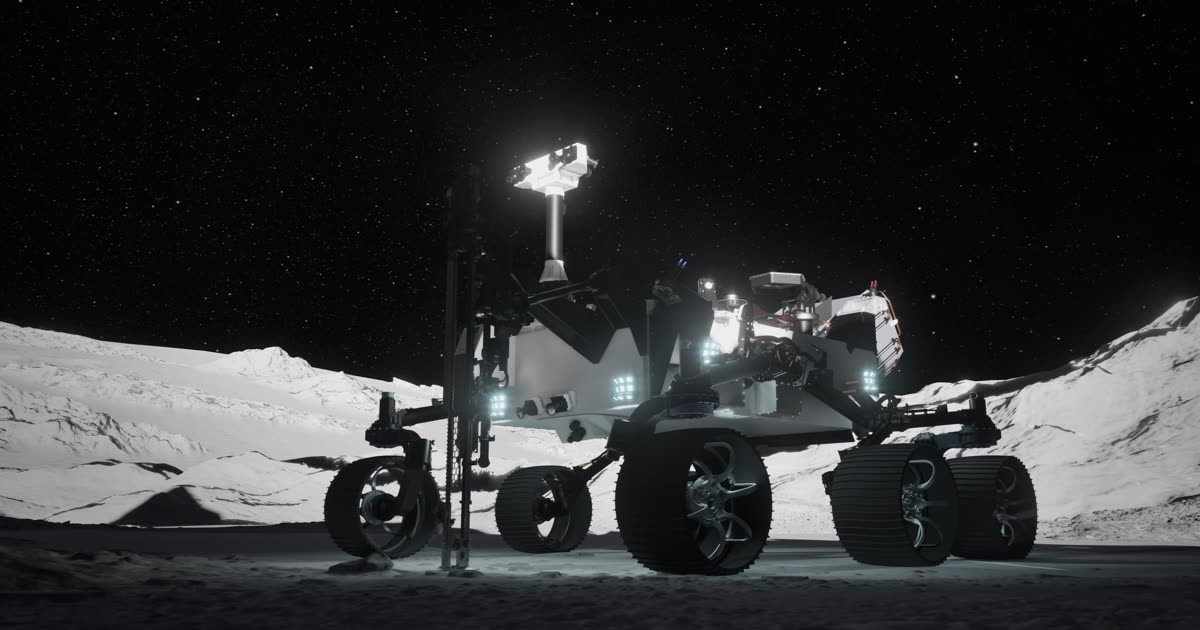
At NASA’s Jet Propulsion Laboratory in California, spare parts and test models from two Mars rovers, Curiosity and Perseverance, now have a new job. They will become a rover for the Moon.
That rover, called PROMISE, was one of several NASA Moon Base announcements on Saturday at the MAX POWER aerospace expo at Kennedy Space Center in Florida. The biggest was a new contract that lets eight companies compete to fly NASA cargo to the Moon, with a combined ceiling of $10 billion over 10 years.
Together, the awards show how NASA wants to build a permanent outpost at the Moon’s South Pole: one robotic delivery at a time, bought from private companies. “We are building the Moon Base mission by mission,” said NASA Administrator Jared Isaacman.
Who can now bid to fly cargo to the NASA Moon Base
The eight companies are Blue Origin, Firefly Aerospace, Intuitive Machines, ispace-U.S., Lockheed Martin Space, Northrop Grumman Space Systems, SpaceX and Voyager Technologies. Under the new contract, called CLPS 2 (NASA calls the first one CLPS 1.0, so you may also see these called the CLPS 2.0 awards), they will build and operate landers that carry NASA science, technology and equipment to the surface.
The $10 billion is a maximum, not a payment. As Fox Business notes, it is a ceiling for future orders, not money already given to anyone. NASA also raised the value of its first CLPS contract from $2.6 billion to $4.2 billion. That contract takes new orders until November 2028, with deliveries allowed until November 2033.
A rover built from Mars leftovers, with a nuclear heart
PROMISE stands for Polar Rover for Observation, Mapping, and In-Situ Exploration. It has six wheels and runs on nuclear power, so it can keep working through the long, freezing lunar nights and inside craters that never see sunlight. Scientists think some of those craters hold ice.
NASA says reusing proven Mars hardware cuts cost and time, and that it has checked the parts can handle South Pole conditions. The PROMISE page says the rover will use a spare nuclear generator of the same type that powers Perseverance. It will carry a drill that reaches about 1 metre (3 feet) down, spectrometers, temperature and radiation sensors, and cameras. It will also test a new radiation-tolerant computer.
NASA is targeting a late-2028 launch and an 18-month mission. Blue Origin won a $94 million base contract, with a $140 million performance-based option, to land it using its Mark 1 lander.
In its own video, NASA’s Jet Propulsion Laboratory shows how the Mars parts become a Moon rover.

The trucks, towers and satellites in between
NASA also awarded six launch and transport task orders worth about $1.3 billion to Arrow Science and Technology, Blue Origin and Impulse Space. They cover navigation tests, MoonFall scout drones to survey the South Pole before astronauts arrive, and “space trucks” that move cargo between orbits. SpaceX will launch communications satellites on Starship toward the Moon in 2028.
For power, NASA chose Honeybee Robotics, Redwire and Yank Technologies to supply parts for a small solar and communications tower, to be assembled at its Marshall centre in Alabama.
The money still has to arrive
Will NASA build a Moon Base? These contracts make it more likely, but much depends on what is not in the release. A ceiling only turns into spending when NASA places orders, and that depends on future budgets. Landing on the Moon is still hard, and in practice each robotic delivery carries real risk.
Why this matters beyond the space industry
For students and engineers anywhere, this is a sign of where space jobs are heading. NASA is acting more like a customer than a builder, which spreads work across large firms and smaller ones such as Impulse Space and Yank Technologies. It is the same buying approach NASA is exploring for a commercial Hubble boost.
For everyone else, the plan comes with clear checkpoints: Starship’s communications satellites in 2028, and the PROMISE launch in late 2028.
Reusing Mars parts is the plan’s strongest idea
On balance, this is a concrete step, with named companies, a named rover, real figures and dates. Building PROMISE from spare Mars parts is a practical, lower-cost way to move faster, and it puts hardware that has already worked on another world to new use.
The caution is scale. The $10 billion headline is a limit, not a commitment, and the plan rests on landers that must keep landing. In practice, big space programmes usually move more slowly than their first announcements suggest.
NASA’s aim is clear, though: crews on its planned 2028 Moon landing and later missions should find equipment already waiting. Watch for the first CLPS 2 orders, and whether PROMISE keeps its late-2028 date.
Prefer to watch? Follow us on YouTube
The tech stories that matter, explained in plain words. Subscribe so you never miss one.
Quick answers
What is NASA's Moon Base?
NASA's plan for a permanent outpost at the Moon's South Pole, built step by step with robotic missions from private companies before and alongside Artemis astronauts.
What is CLPS 2?
A 10-year NASA contract with a combined maximum value of $10bn. Eight companies can bid on it to carry NASA cargo to the Moon's surface.
What is the PROMISE rover?
A six-wheeled, nuclear-powered rover that NASA's Jet Propulsion Laboratory will build from spare Curiosity and Perseverance parts. It is due to launch in late 2028.
Which companies won NASA Moon Base contracts?
Blue Origin, Firefly Aerospace, Intuitive Machines, ispace-U.S., Lockheed Martin Space, Northrop Grumman Space Systems, SpaceX and Voyager Technologies joined CLPS 2. Arrow Science and Technology, Impulse Space, Honeybee Robotics, Redwire and Yank Technologies won other work.
Why the Moon's South Pole?
Some craters there never see sunlight. Scientists think they may hold ice, which future crews could use.
Words to know
- CLPS
- Commercial Lunar Payload Services: NASA buys Moon deliveries from companies instead of building its own landers.
- Contract ceiling
- The most that can be spent under a contract over its life. Money is only paid when NASA orders specific missions.
- Cislunar space
- The region of space between Earth and the Moon.
- Orbital transfer vehicle
- A space 'truck' that moves cargo from one orbit to another, for example from near Earth toward the Moon.
- Permanently shadowed region
- A crater floor near the Moon's poles that sunlight never reaches, cold enough to trap ice.
- Regolith
- The loose dust and broken rock that covers the Moon's surface.
Sources (5): every key fact checked against at least two
- NASA release 26-095: NASA Awards Moon Base Transportation, Technology, Science Projects (7 November 2026)
- NASA: PROMISE mission page (7 November 2026)
- NASA: Moon Base
- Fox Business: NASA unveils $10B Moon base contract as SpaceX, Blue Origin join lunar gold rush (Jasmine Baehr, 7 November 2026)
- Space.com: NASA wants to send spare nuclear-powered Mars rover to the lunar surface (30 June 2026)
Related stories
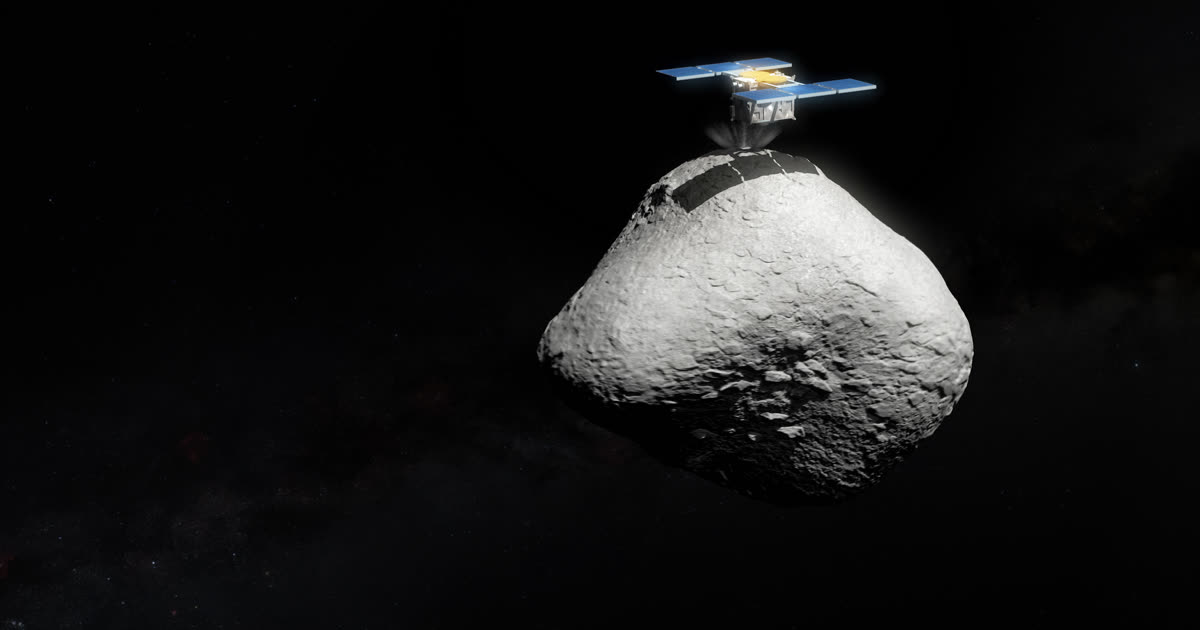
Hayabusa2's next asteroid, 1998 KY26, is too warm to hide ice, a new study finds
Is 1998 KY26 a dark comet? A new study says the tiny asteroid Hayabusa2 will visit in 2031 is too warm to keep ice. What it means, and what's next.
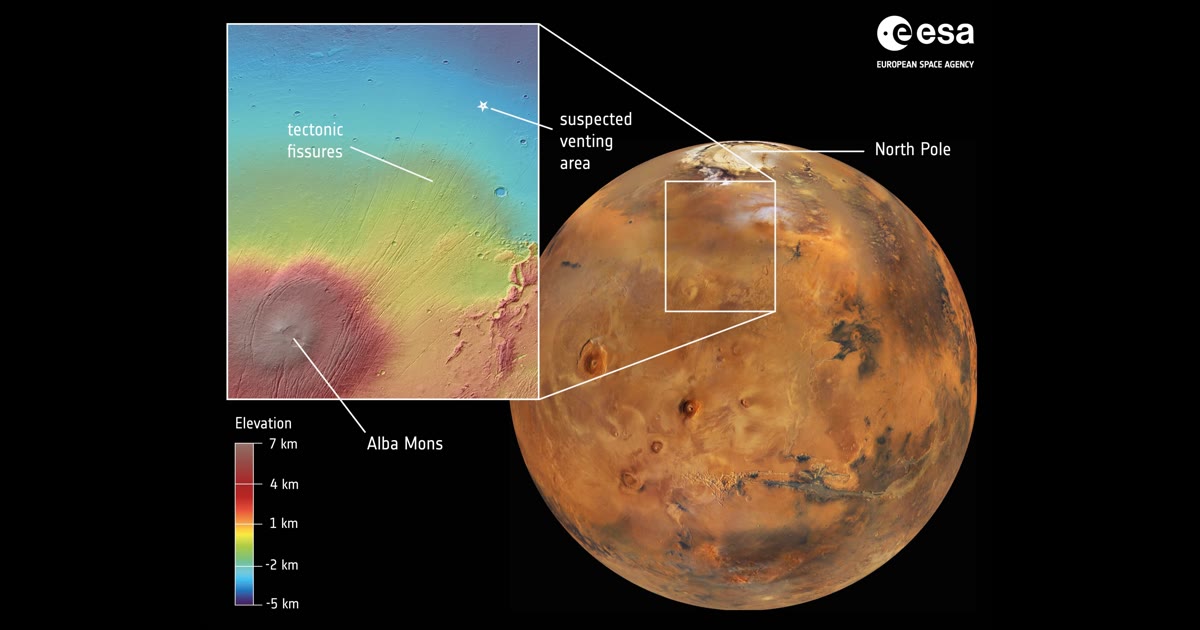
A gas seeping from cracks on a giant Mars volcano hints the planet may not be volcanically dead
Is there still Mars volcanic activity? ESA's orbiter found hydrogen chloride above fresh cracks on Alba Mons. Why it is a hint, not proof, and what's next.
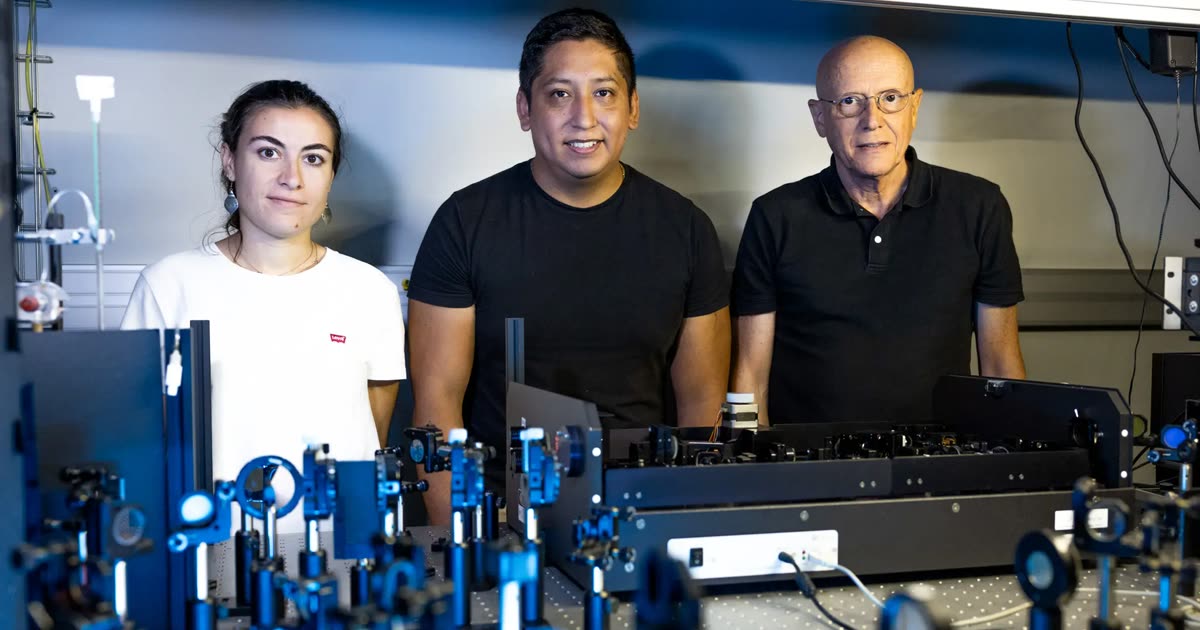
Solar panels that 'almost double' output? What a Barcelona lab really showed, and why it still matters
A solar panel efficiency breakthrough that almost doubles output? What ICFO's study really showed, why 43% is a ceiling, and why the idea still matters.