NASA astronaut applications are open until 3 December, for a class that could live at the Moon Base
- NASA is taking applications for its next astronaut class until 11:59 p.m. EST on 3 December 2026.
- Only US citizens can apply. They need a STEM master's (or an accepted alternative), three years of related work and a pass on NASA's physical.
- NASA expects to choose the class in late 2027. These astronauts could work on the Moon Base and help prepare crewed missions to Mars.
- 3 DecApplication deadline11:59 p.m. EST (04:59 UTC, 4 Dec)
- 8,000+Applications in the last round (2024)10 candidates chosen in 2025
- 32Active NASA astronauts today370 chosen since the 1960s
- Late 2027When NASA expects to chooseFinal pick of the new class
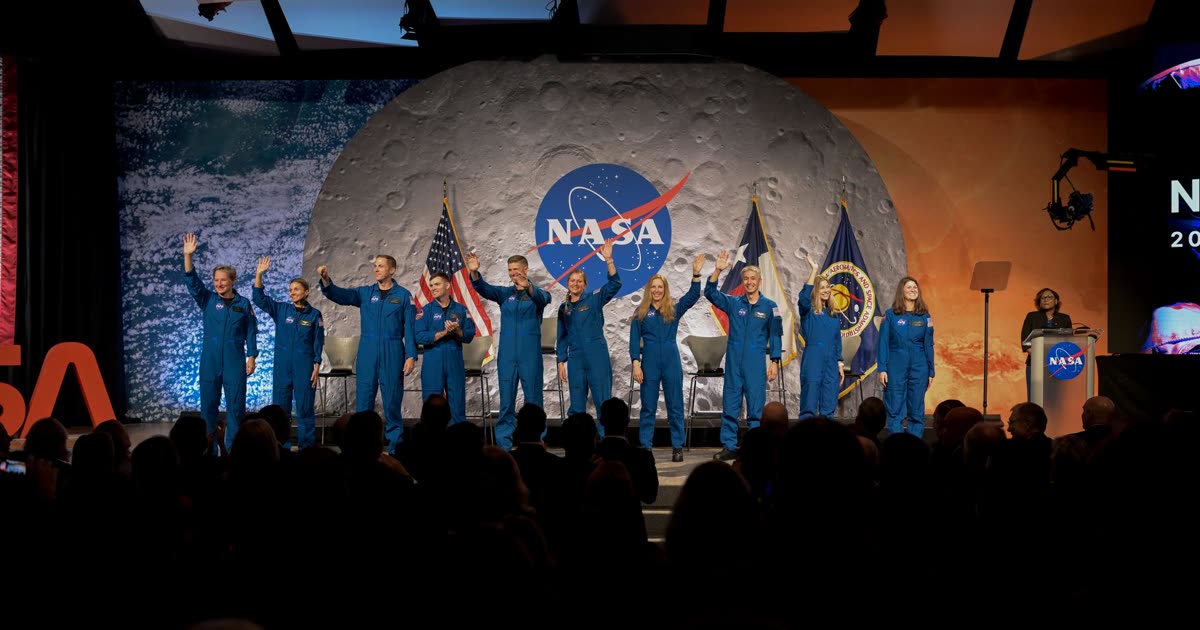
Somewhere this week, an engineer, a doctor or a test pilot is reading a job advert that ends at the Moon. The NASA astronaut application 2026 window is now open, and the people chosen could be among the first to live and work at its planned Moon Base.
Applications close at 11:59 p.m. Eastern time on Thursday, 3 December. NASA expects to choose the new class in late 2027. The call came on 7 November, the same day NASA named the companies that can bid to fly cargo to the Moon Base and the rover built from Mars parts. Machines go first; people follow.
Why NASA is hiring again after only two years
NASA last asked for applications in 2024. More than 8,000 people applied, and 10 were chosen in September 2025. That class is still finishing nearly two years of training.
So why a new call so soon? NASA’s release does not give a reason. In our reading, the numbers point to one: the agency has 32 active astronauts, and its plans now include repeated missions near the Moon’s South Pole, a long-term base and early work toward Mars. A small corps cannot staff all of that.
“The people we select could walk on the Moon, live and work at the Moon Base,” said NASA Administrator Jared Isaacman. Those chosen will study spacewalking, lunar geology and flying high-performance aircraft, among other skills.
NASA astronaut application 2026: who can apply, in plain words
Of all the NASA astronaut requirements, one matters most to readers around the world: you must be a US citizen. Then come three tests.
- A degree. A master’s degree in a STEM field, such as engineering, biology, physical science or computer science, from an accredited institution. NASA also accepts two years of work toward a related PhD, a medical degree (including physician assistant and nurse practitioner degrees), or a nationally recognised Test Pilot School finished by July 2027, plus a STEM bachelor’s degree.
- Experience. At least three years of related professional work after that degree. Pilots can count flying time instead, for example 750 hours as pilot in command of high-performance jets. Doctors can count residency, if it ends by July 2027.
- Health. A pass on NASA’s long-duration astronaut flight physical, plus strong leadership, teamwork and communication skills.
NASA’s own general recruiting video, from its “Become an Astronaut” page, is below. It is not a new announcement.

What NASA has not said yet
Some useful details are missing. NASA has not said how many people it will pick this time. The pay grade sits in the official US government job posting, which we could not read, so we do not give a figure here. LiveNOW from FOX reports that training should begin in early 2028; NASA’s release says only that the final pick is expected in late 2027.
If you live outside the United States
For most of our readers, this door is closed, and that is worth saying kindly and clearly. People often search how to become a NASA astronaut from India, or from anywhere else. The honest answer is that NASA only takes US citizens. Other countries’ space agencies run their own astronaut selections, and those are the places to look.
The list is still useful. It shows what space agencies value: deep study in science or medicine, real working years, and a body and temperament fit for long missions. For a student anywhere, that is a fair map of the road.
A clear, open call, with the hardest part still ahead
On balance, this is a well-made call. The rules are public, the deadline is firm, and several routes count, from medicine to flying. That keeps the door open to people who did not follow one fixed path.
The caution is timing. Astronauts chosen in late 2027 need years of training, and the missions they train for depend on landers, budgets and dates that can move. In practice, crewed programmes often run later than first planned. NASA’s planned 2028 Moon landing will be the first big test of this schedule.
Still, hiring people is a sign of intent. Watch two things: how many applied when the window closes on 3 December, and how many names NASA reads out in late 2027.
Prefer to watch? Follow us on YouTube
The tech stories that matter, explained in plain words. Subscribe so you never miss one.
Quick answers
When is the NASA astronaut application 2026 deadline?
11:59 p.m. Eastern Standard Time on Thursday, 3 December 2026. That is 04:59 UTC on 4 December.
What are the NASA astronaut requirements?
US citizenship, a master's degree in a STEM field (or an accepted alternative such as two years of a related PhD, a medical degree or Test Pilot School), at least three years of related experience after that degree, and a pass on NASA's long-duration flight physical.
How do you become a NASA astronaut from India or another country?
You cannot apply to NASA unless you are a US citizen. Other countries' space agencies run their own astronaut selections.
How long does the NASA astronaut application process take?
Applications close on 3 December 2026, and NASA expects to make its final selection in late 2027, about a year later.
Words to know
- Astronaut candidate
- Someone NASA has picked for training who has not yet become a full astronaut.
- STEM
- Science, technology, engineering and mathematics.
- Pilot-in-command time
- Flying hours spent as the pilot in charge of the aircraft.
- Long-duration flight physical
- NASA's medical exam for astronauts who may spend long periods in space.
- Moon Base
- NASA's planned long-term outpost near the Moon's South Pole.
Sources (3): every key fact checked against at least two
Related stories
Hayabusa2's next asteroid, 1998 KY26, is too warm to hide ice, a new study finds
Is 1998 KY26 a dark comet? A new study says the tiny asteroid Hayabusa2 will visit in 2031 is too warm to keep ice. What it means, and what's next.
NASA Moon Base: eight companies can bid for up to $10bn of lander work, and a rover reuses Mars parts
NASA Moon Base update: eight firms can now bid for up to $10bn in Moon deliveries, and JPL will build a nuclear-powered rover from spare Mars rover parts.
A gas seeping from cracks on a giant Mars volcano hints the planet may not be volcanically dead
Is there still Mars volcanic activity? ESA's orbiter found hydrogen chloride above fresh cracks on Alba Mons. Why it is a hint, not proof, and what's next.