Samsung's AI memory earns a record quarter, while its phones lose money and shares fall
- Samsung made 107.4 trillion won (about US$80 billion) in operating profit in July-September, a record, and almost all of it came from chips.
- Its phone, TV and appliance business lost 0.8 trillion won as memory and other parts cost more, and Samsung expects fewer cheap phones sold in 2027.
- Its AI memory for 2027 is already sold out, yet the shares fell more than 4% as investors had hoped for more.
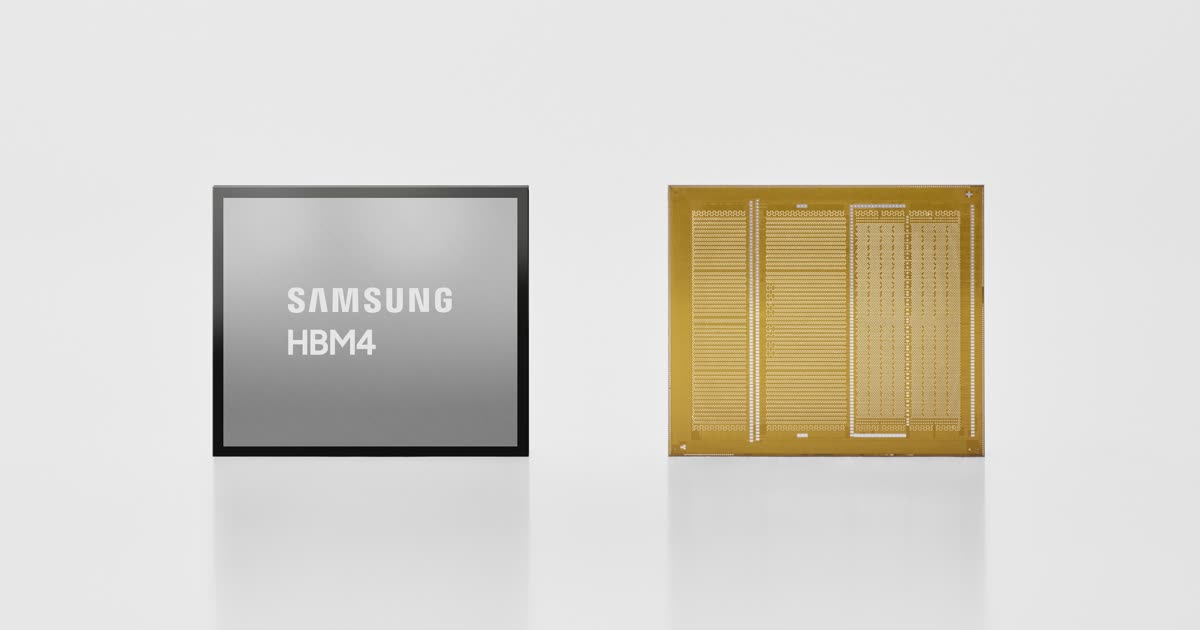
The chip in the photo above is Samsung’s HBM4, a stack of fast memory that sits beside the processors in AI data centres. This quarter it helped Samsung become, by its own count, the first tech company to make more than 100 trillion won of operating profit in three months. Yet on the same day, the shares fell and Samsung’s own phone business reported a loss.
The Samsung Q3 results, published on 29 October, show both sides of the AI memory boom. Samsung first gave the headline revenue and profit as preliminary guidance on 8 October. What is new today is the detail: where the money came from, who paid for it, and what Samsung expects next year.
Samsung Q3 results: 107.4 trillion won, almost all from chips
Samsung’s figures for July to September 2026:
- Revenue: 195.3 trillion won (about US$146 billion), a record, up 14% on the previous quarter and up 127% on a year ago.
- Operating profit: 107.4 trillion won (about US$80 billion), up 783% on a year ago.
- Margin: 55 won of operating profit from every 100 won of sales, against 14 won a year ago.
- Chips: the semiconductor division made 106.5 trillion won of that profit, about 99% of the total.
On the earnings call, Samsung said its HBM4 sales more than tripled from the previous quarter and now make up about 60% of its HBM sales. It also said its HBM supply for 2027 is “already sold out” at prices it had targeted. It plans to spend about 84.4 trillion won on new factories and equipment this year, most of it on chips.
Shareholders get a dividend of 4,601 won per share, about 30 trillion won in total. Samsung plans 90 to 110 trillion won in returns for 2026, and will set the rest, including a large share buyback, at a board meeting in late January.
The record that left phones and investors behind
Here is the uncomfortable part. The division that makes phones, TVs and home appliances lost 0.8 trillion won. Samsung blamed “cost pressures” for its mobile business and higher raw material costs for appliances. In other words, as we read it, the chip arm earns from the same price rises that squeeze the phone arm.
Investors were not fully satisfied either. Samsung shares fell more than 4% in Seoul. Analysts quoted by Seoul Economic Daily and Aju Press pointed to chip profit below what some had hoped for, no new buyback figure until January, and profit-taking after a strong rally in Seoul the day before.
Why pricier memory may reach your next phone or laptop
The memory chips in phones and laptops come from the same makers as AI memory, and Samsung says server demand pushed up memory prices across all uses. Daniel Araujo of Samsung’s mobile division said on the call that component costs are expected to stay high next year. Samsung expects to sell fewer phones in 2027, mainly mid-range and entry-level models, as costs push prices up.
That is Samsung’s outlook, not a price promise. Still, it matches what SK hynix said a day earlier, when it predicted memory would stay short until 2030. If you plan to buy a phone, laptop or PC upgrade, buying when you need it may make more sense than waiting for prices to drop. In practice, some makers may also offer less memory at the same price, so check the specs. The PC market is already weak: Microsoft’s latest results showed Windows revenue from new PCs down 22%.
If you hold Samsung stock, directly or through a fund, today’s fall is a reminder that a record can still disappoint when hopes run higher. This is not investment advice.
Samsung’s AI memory bet is paying off, but it leans on one engine
Credit where it is due. HBM4 now makes up most of Samsung’s HBM sales, next year’s supply is already sold, and Samsung is returning a large share of the money to owners. Together with TSMC’s record quarter, it shows how far AI now drives the whole chip industry.
The weak spots are clear too. In our reading, a company where chips make 99% of the profit depends on AI spending staying high, and that spending still has to pay for itself. Samsung, SK hynix and others are also building new factories at once, which in past cycles is how memory booms ended.
On balance, Samsung looks well placed for 2027, but its record rests on one engine, and people buying phones and laptops may end up paying part of the bill.
The next date to watch is late January, when Samsung’s board sets the buyback. Before that, keep an eye on phone and laptop prices this year-end shopping season.
Sources (8): every key fact checked against at least two
- Samsung Newsroom: Samsung Electronics Announces Third Quarter 2026 Results (29 Oct 2026)
- Samsung Newsroom: Samsung Electronics Announces Earnings Guidance for Third Quarter 2026 (8 Oct 2026)
- The Korea Herald: Samsung fires back in AI chip race with record W107tr profit
- The Asia Business Daily: [Conference Call] Samsung Electronics: Q3 HBM4 revenue surges more than threefold, next year's supply already sold out
- Digital Today: Samsung Electronics Q3 operating profit 107.4 trillion won, up 783 percent
- Seoul Economic Daily: Samsung Shares Slide 5% Despite Record 107 Trillion Won Profit
- Aju Press: KOSPI slides as Samsung earnings fall short of expectations
- Android Authority: Samsung teases Galaxy S27 plans as its phone business slips into the red again
Related stories

DoorDash agrees to buy Instacart for about US$17bn, promising one membership instead of two
The DoorDash Instacart acquisition values Instacart at about US$17bn. What changes for shoppers, members and drivers, and why regulators come next.

Amazon Q3 2026 earnings: AWS grows 39% and margins hit a record, but AI building turns cash flow negative
Amazon Q3 earnings 2026: sales rose 12% to US$201.9bn and AWS grew 39%, but AI data centre spending pushed free cash flow below zero.

eBay Q3 2026 earnings: collectibles, live shopping and Depop lift revenue 14%, a week after job cuts
eBay Q3 earnings 2026: revenue rose 14% to $3.2 billion, beating its forecast, a week after eBay said it would cut 9% of staff. Here's what drove it.