Donald Knuth stops reading new error reports for now, and his famous $2.56 reward check waits
- Donald Knuth will not look at error reports sent after 25 November 2026 until he posts updated lists of known errors.
- His page does not cancel the reward: the first finder of a real error is still promised at least 0x$1.00, or $2.56.
- He says tools built on large language models have sped up reports beyond what he can read; curl ended its own bounty in January.
- $2.56One 'hexadecimal dollar' (0x$1)Knuth's boss.html page
- 1968First reward checksKnuth's site; Wikipedia
- 25 Nov 2026Reports after this are on holdKnuth's moratorium page
- Oct 2008Real checks replacedCheck fraud; Knuth's 2008 news page
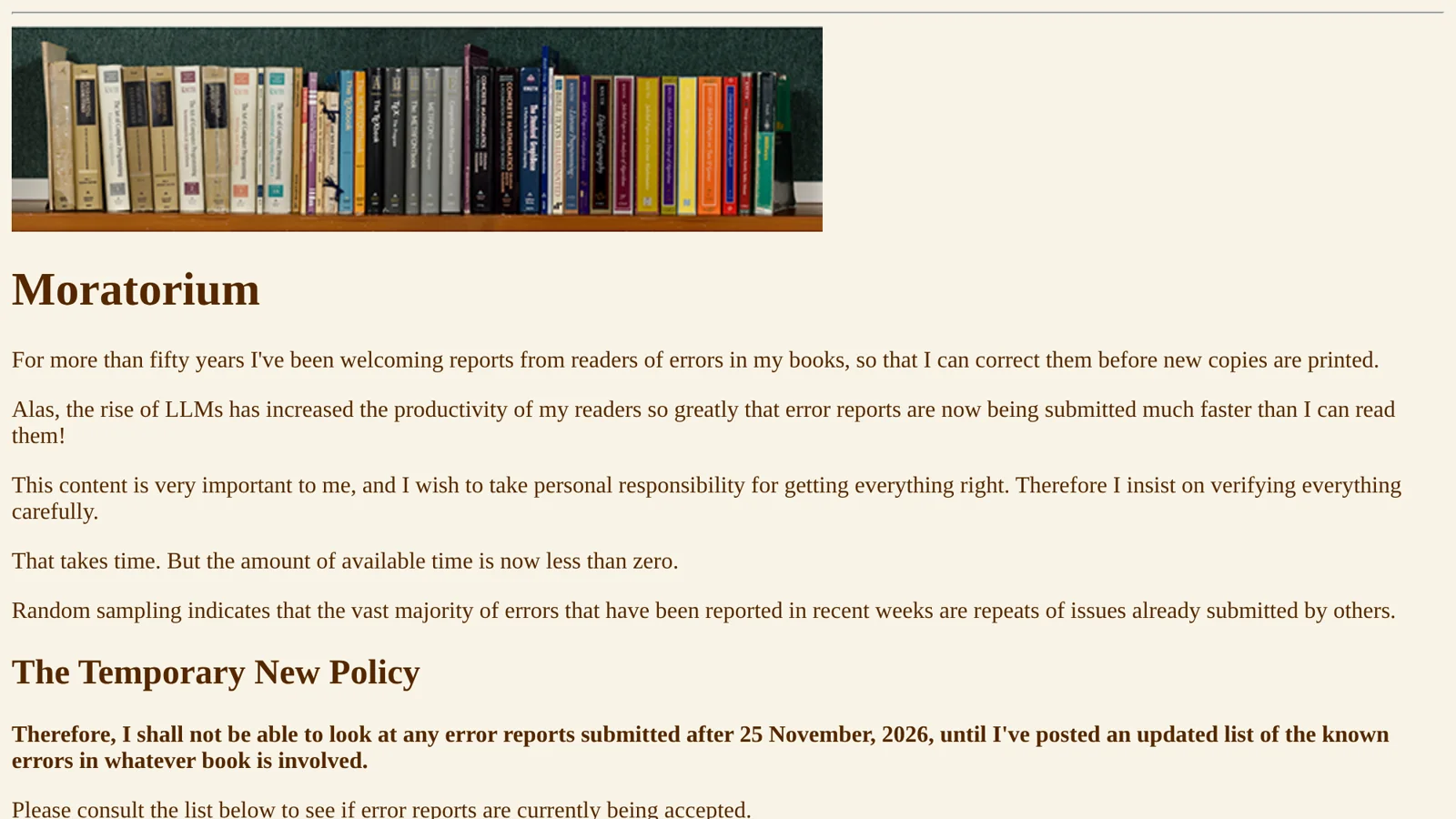
On Donald Knuth’s Stanford page, the list of books for which error reports are welcome is empty. Since the late 1960s, readers of his books have hunted for mistakes in the hope of a reward from him, most famously a check for $2.56. Now the computer scientist says he can no longer keep up with the mail.
Knuth says he will not look at any error report sent after 25 November 2026 until he posts an updated list of known errors for that book. It is a pause, not a goodbye: his pages do not cancel the Knuth reward check.
The story matters beyond one professor’s inbox. Open projects have long relied on strangers to find faults for small rewards. Knuth’s warning follows curl, whose founder ended its bug bounty in January after a flood of poor, machine-made reports. It is part of a wider wave of “AI slop” that also led Tidal to remove fully AI-made songs.
Why Knuth says he is “drowning”
Knuth writes that he has welcomed error reports for “more than fifty years”. He says tools built on large language models have raised readers’ “productivity” so much that reports now arrive faster than he can read them. He insists on checking each one himself, and writes that “the amount of available time is now less than zero”.
He also checked a random sample of the recent mail. By his account, most of what arrived in recent weeks had already been reported by someone else.
His news page, under the heading “Help, I’m drowning!”, says “a temporary moratorium has become necessary”.
Back on the moratorium page, the list headed “Books for which errata are now welcome” is empty for now. He says he is “swamped”, hopes to add books soon, and says he will do his best to get through existing reports “as soon as humanly possible.”
 Screenshot: Donald E. Knuth
What the Knuth reward check is worth
The reward is 0x$1, one “hexadecimal dollar”. Hexadecimal counts in sixteens, so 0x$1 is 256 cents. Knuth’s own page gives the par value as $2.56. His books page still promises at least that to the first person to report a real error, and asks readers to note the moratorium.
Reward checks began in 1968, according to Knuth’s site and Wikipedia. In October 2008 he stopped writing real bank checks because of check fraud. Since then he issues certificates from a fictional institution, the Bank of San Serriffe. In 2008 he called the new rewards “brownie points”, “kudos, not escudos”.
In 2008 Knuth wrote that only 9 of the first 275 checks he had sent since early 2006 were ever cashed.
Curl closed its bounty first
Daniel Stenberg, founder of the curl data-transfer tool, ended its bug bounty on 31 January 2026. Since April 2019, curl had paid over $100,000 for 87 confirmed vulnerabilities. The share of reports that proved real was “north of 15%” in earlier years and fell below 5% from 2025. He pointed to “an explosion in AI slop reports” as a cause of the decline, along with lower quality even in reports that were not obvious slop. Curl still takes security reports privately, through GitHub or email.
What Knuth has not said yet
His pages give no end date for the pause. They do not say whether reports sent during it will earn a reward later. He also gives no count of how many reports he has received.
If you have found a mistake in a Knuth book
If you think you have found an error in any of his books, including The Art of Computer Programming, wait. Check whether your book is on his list of books for which errata are welcome, and read the known-errors list first. Many reports are duplicates.
In our analysis, the wider lesson is for anyone who runs a project that accepts public reports: a small reward invites care when finding a mistake takes effort, and invites volume when tools make it cheap.
Why a pause is the gentler answer
The good news is that Knuth chose the mildest option. He did not close the door or end the reward. He asked for patience and promised to return. By reading each report himself, he keeps the standard that made the check prized.
The cost is real. Careful readers with genuine finds must wait, and no date is given. Curl’s decision to end its bounty outright shows the harder path open to a project when the volume does not ease.
On balance, this reads as a sensible response to a hard problem. The likelier outcome, in our analysis, is a slow reopening book by book, with stricter ways to filter repeats.
The next sign to watch is simple: when the first book appears on his list.
Prefer to watch? Follow us on YouTube
The tech stories that matter, explained in plain words. Subscribe so you never miss one.
Quick answers
What is a Knuth reward check?
It is a small reward from Donald Knuth for the first person to report a real error in one of his books. Its par value is 0x$1, which is $2.56.
Has Donald Knuth stopped paying for errors?
Not according to his pages. He has paused reading new reports. His books page still promises the reward and points readers to the temporary moratorium.
Can I still report an error in his books?
Not for now. Wait until the book you read appears on his list of books for which errata are welcome.
Why did curl end its bug bounty?
Daniel Stenberg, curl's founder, said confirmed reports fell below 5% from 2025, which he blamed on a wave of AI-made 'slop' reports and lower quality overall. Curl still takes security reports privately, through GitHub or email.
Words to know
- Errata
- A list of known mistakes in a book.
- Hexadecimal
- Base-16 counting used in computing. 0x100 equals 256, so 0x$1 is 256 cents.
- Moratorium
- A temporary stop.
- Bug bounty
- A reward paid for reporting a flaw in software.
- LLM
- Large language model, the kind of AI behind chatbots.
Sources (8): every key fact checked against at least two
- Donald Knuth, Moratorium (Stanford)
- Donald Knuth, Recent News (Stanford)
- Donald Knuth, Books (Stanford)
- Donald Knuth, Bank of San Serriffe (Stanford)
- Daniel Stenberg, The end of the curl bug-bounty
- Donald Knuth, Recent News 2008 (Stanford)
- curl, pull request removing the bug bounty (GitHub)
- Wikipedia, Knuth reward check
Related stories
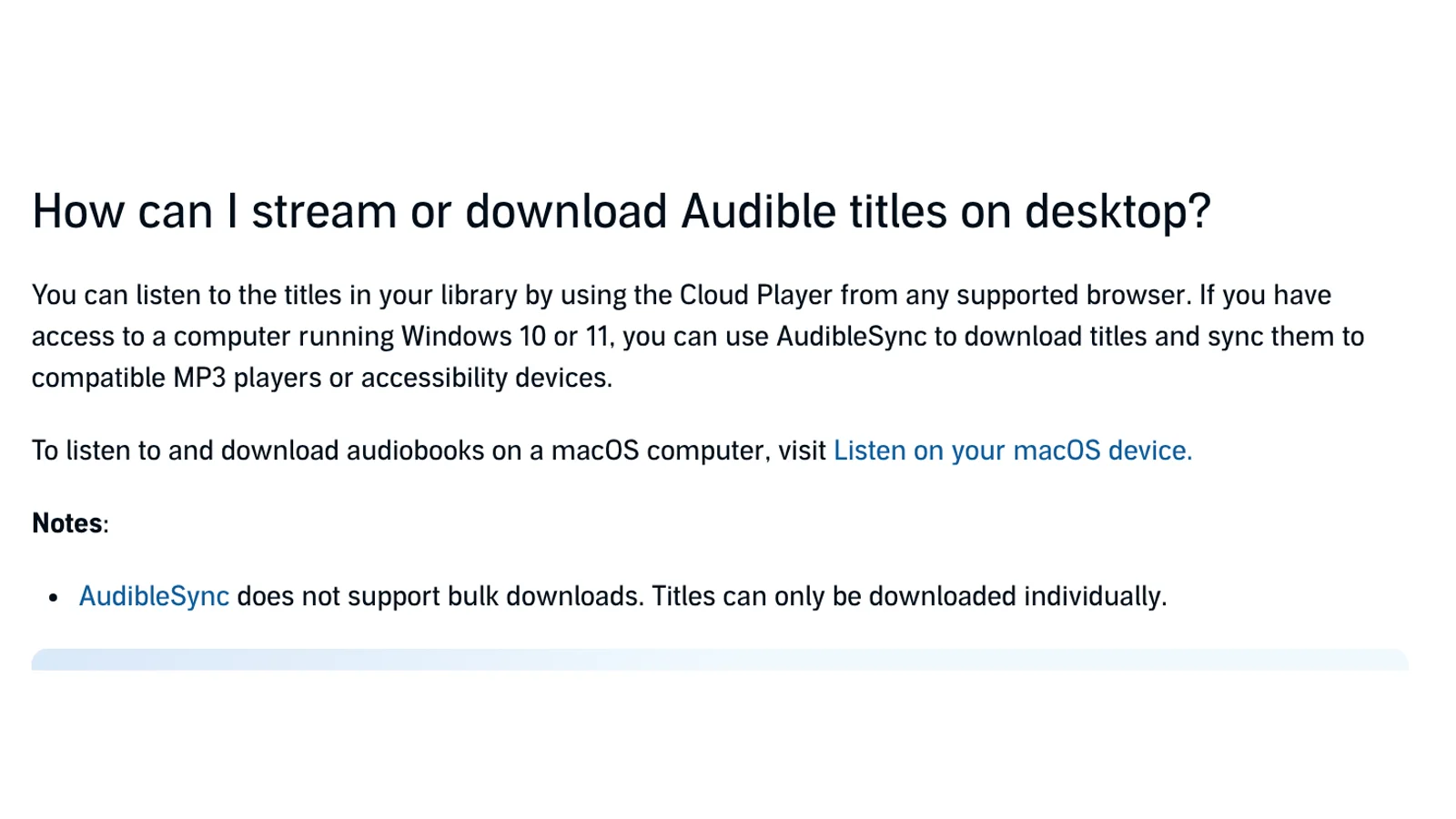
Audible's website download button is gone: what US buyers can still do with their audiobooks
Audible download button missing on the US website? It was removed in 2026 without an announcement. Here is what still works and what buyers can do.
· 3 min read
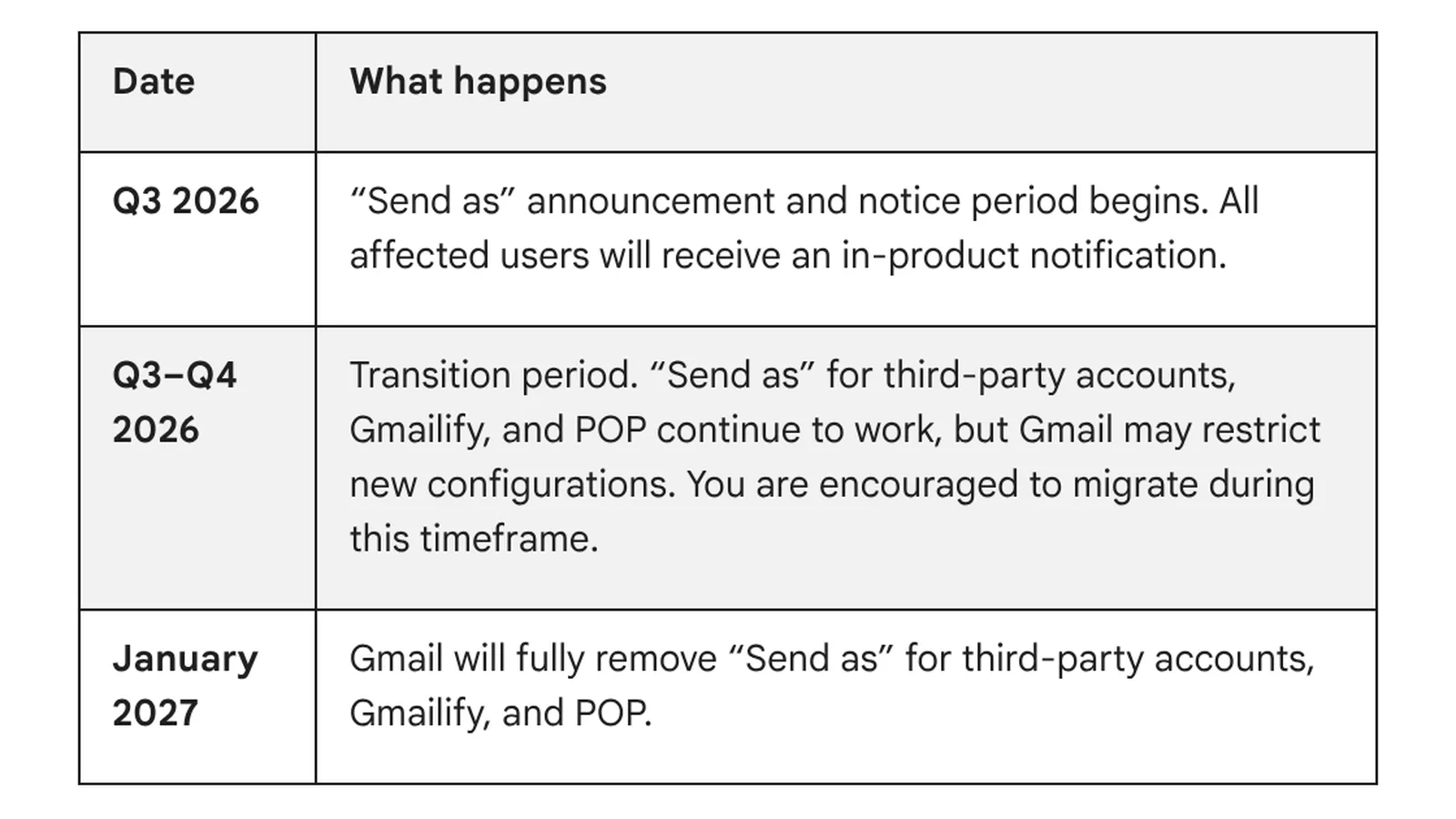
Gmail's Send as ends for Yahoo, Outlook and other outside addresses in January 2027: what to do now
Gmail send as ending: Google will stop Send as for Yahoo, Outlook and other non-Google addresses in January 2027. See what changes and what to do.
· 4 min read

Air Force Cloud One reportedly hacked: what we know, and what the Air Force won't say
Reuters reports hackers got into Air Force Cloud One, and a US official told NBC News the same. The Air Force will not comment. Here is what is known.
· 4 min read