Apple Intelligence finally comes to China, with Alibaba's Qwen inside Siri
- Apple Intelligence is coming to iPhones in mainland China: testing starts on 4 November, and the full launch comes with iOS 27.3 in December.
- Apple worked with Alibaba so people can use its Qwen AI inside Siri, Writing Tools and Visual Intelligence, on iPhone 15 Pro and later models.
- The new Siri AI and the other next-generation features shown at WWDC 2026 are not part of this update.
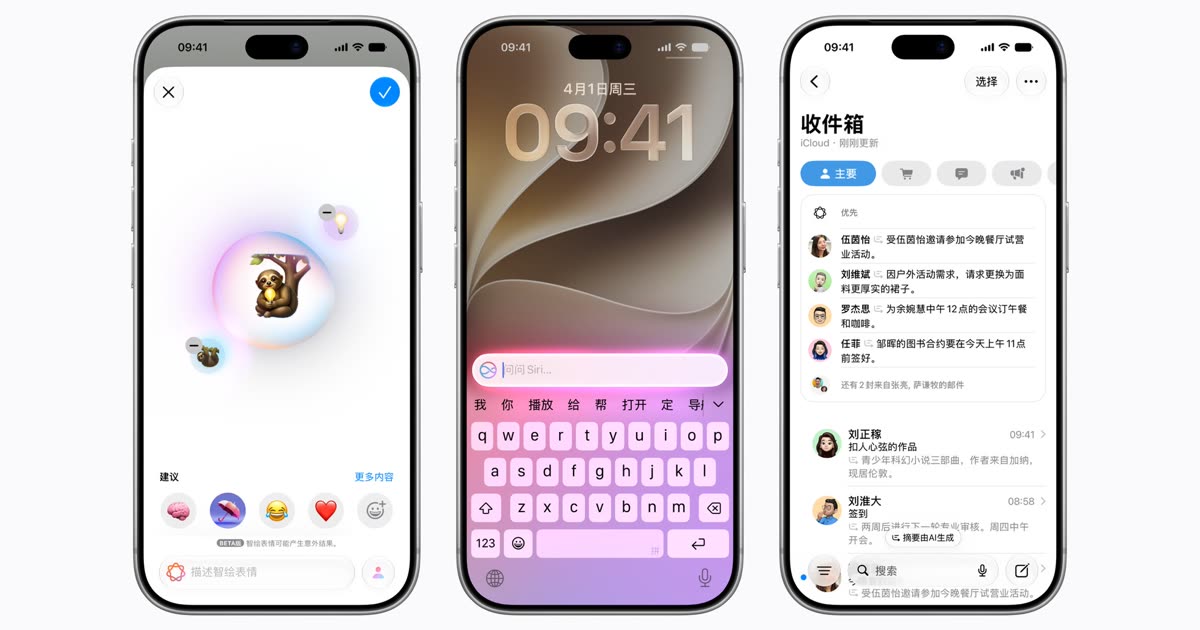
For two years, an iPhone 16 bought in Shanghai could not do what the same phone did in San Francisco. It could not summarise an email, rewrite a message or clean a stranger out of a photo. That gap is about to close. Apple says Apple Intelligence in China starts testing on 4 November and reaches users with iOS 27.3 in December.
There is a twist. In China, some of the heavy lifting will come from Alibaba. Apple worked with the Chinese company so people can use its Qwen AI model inside Siri, Writing Tools and Visual Intelligence. Until now, iPhones sold there have been missing the features Apple builds its pitch around.
What iPhone owners in China get in December
Apple’s own announcement, on its China newsroom, lists the first batch. Apple says the core features run on its own generative models.
- Live Translation in Messages, FaceTime and Phone, and for face-to-face talks through supported AirPods.
- Writing Tools to rewrite, proofread and summarise text.
- Visual Intelligence, which uses the camera to identify objects and places.
- Photos tools: Clean Up to remove distractions, search by description, and Memories movies.
- Genmoji, custom emoji made from a short description.
- Calmer inboxes: Priority Messages and summaries in Mail, Smart Reply, notification summaries and a Reduce Interruptions focus mode.
- Summaries of recordings and call transcripts in Notes and Phone, and Type to Siri.
Qwen sits on top of that. Siri can call on Qwen’s general knowledge for some requests. People can ask questions about photos and documents such as PDFs and slides. A Compose option in Writing Tools lets Qwen write new text from scratch. Users sign in with a Qwen account or with Sign in with Apple.
It works on the iPhone 15 Pro and 15 Pro Max, the iPhone Air, the iPhone 16 and later, and the iPhone Duo, Apple’s first foldable. Apple lists the supported language settings for Siri and the phone as English and Chinese (Simplified).
The newest Siri AI stays outside the door
What is missing matters as much. Apple says this update does not include Siri AI, the rebuilt assistant it showed at WWDC 2026, or its other next-generation features. Image Playground is also not on Apple’s list. Mac, iPad and other devices will follow “after the necessary approvals”, Apple says.
That phrase is the heart of the story. China restricts foreign AI technology, which is why Apple needed a local partner, MacRumors reports. Reports in MacRumors and The Next Web say regulators gave early approval in July. MacRumors, citing Bloomberg, also reports that Apple must let the government approve later updates to the models.
The open question is privacy. Apple’s announcement does not say how requests sent to Qwen are handled, or how long that data is kept. For a company that sells privacy as a feature, that detail deserves a clear answer before December.
If you use an iPhone in mainland China, or call someone who does
For iPhone owners in mainland China, the practical step is simple: check your model. An iPhone 15, or an older phone, will not get these features. Developers can try the beta from 4 November and should test how their apps behave with Writing Tools in Chinese.
In December, China joins the Apple Intelligence countries and regions, about two years after the first launch in the US. Readers elsewhere may feel it too. Families with relatives in China, students and business travellers are the people Live Translation is built for. It also shows that one phone can now behave differently from country to country, a pattern that, in our reading, will grow as rules on AI and technology exports diverge.
Why a partial Apple Intelligence China launch is still the right move
In our analysis, Apple has made a sensible trade. Shipping proven features with a well-known local partner is better than waiting years for a perfect launch. China’s own phone makers, such as Huawei, have offered AI features for some time, MacRumors notes, so every month of delay had a cost.
The weaker side is clarity. An iPhone that answers differently, and keeps data differently, depending on where it was sold asks a lot of trust from customers. On balance, this is a meaningful step for people in China, and a reminder that “the same iPhone everywhere” is quietly becoming a thing of the past.
The December release date is only the first test
Watch for three things as the Apple Intelligence China rollout begins: the exact iOS 27.3 release date, what Apple says about Qwen and privacy, and whether Siri AI ever gets the same approval. The phones are ready. The answers are what people are waiting for now.
Sources (4): every key fact checked against at least two
- Apple Newsroom China: Apple Intelligence features are coming to users in China (31 Oct 2026)
- The Verge: Apple Intelligence is coming to China in iOS 27.3 (30 Oct 2026)
- The Next Web: Apple Intelligence comes to China with Alibaba's Qwen (30 Oct 2026)
- MacRumors: Apple Intelligence to launch in China with iOS 27.3, report says (14 Oct 2026)
Related stories
Judge lets the NAACP's clean-air case over xAI's Mississippi turbines go ahead
xAI NAACP lawsuit: a US judge refused to dismiss the clean-air case over gas turbines at xAI's Southaven site. No wrongdoing found yet. What comes next.

Google's Project Suncatcher satellite sends its first AI answer from orbit: a haiku
Google's Project Suncatcher test satellite ran its first AI prompt in orbit and sent back a haiku. Radiation tests come next, then two satellites in 2027.
Mistral releases Mistral Large 4's open weights: a trillion-parameter AI anyone can download
Mistral Large 4, nicknamed Le Chonk, now has open weights on Hugging Face. What the free licence allows, what it costs to run, and the security question.