Developing story
UN talks on 'killer robots' end with two more years of discussion, not a treaty
- Countries in the UN Convention on Certain Conventional Weapons ended a week of talks in Geneva on 21 Nov 2026 with no treaty talks agreed.
- They gave an expert group two more years to develop an instrument and recommend whether it should be legally binding.
- The Red Cross called it a missed opportunity; a senior UN official said the path to a binding rule is still open.
- 128Countries in the CCWUN Geneva press release
- 163States backing treaty talks at the UNUNGA committee, Oct 2026 (ICRC)
- 2More years of talksWork due by 2028 (Reuters)
- 2016Year the UN expert group beganUN Geneva press release
For a week, countries in a UN weapons treaty with 128 members met at Geneva’s Palais des Nations. They argued over one question: should there be a global rule on weapons that choose their own targets? The talks ended in the early hours of 21 November 2026 with no treaty and no agreement to start negotiating one. Countries chose two more years of expert work instead.
This was the deadline year. The UN Secretary-General and the Red Cross wanted an autonomous weapons treaty concluded by the end of 2026. That goal has now been missed, in a year when the Red Cross says concerns about autonomous weapons have “grown ever more acute”.
No autonomous weapons treaty yet: what was agreed
The meeting was the Seventh Review Conference of the Convention on Certain Conventional Weapons (CCW), a 1980 UN treaty that limits weapons causing unnecessary suffering. According to the UN Geneva press release, the conference was due to decide the future of the work on lethal autonomous weapons systems.
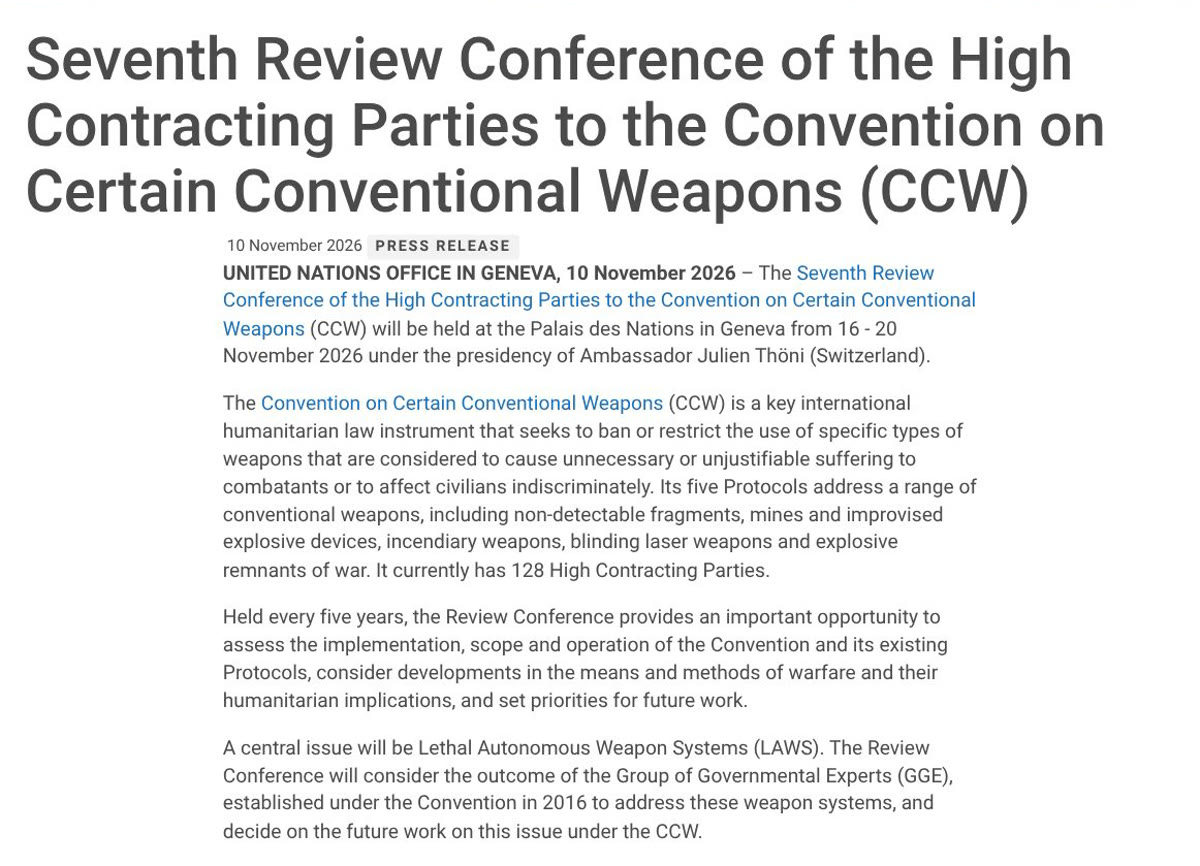
UN Geneva’s press release on ungeneva.org. Image: United Nations
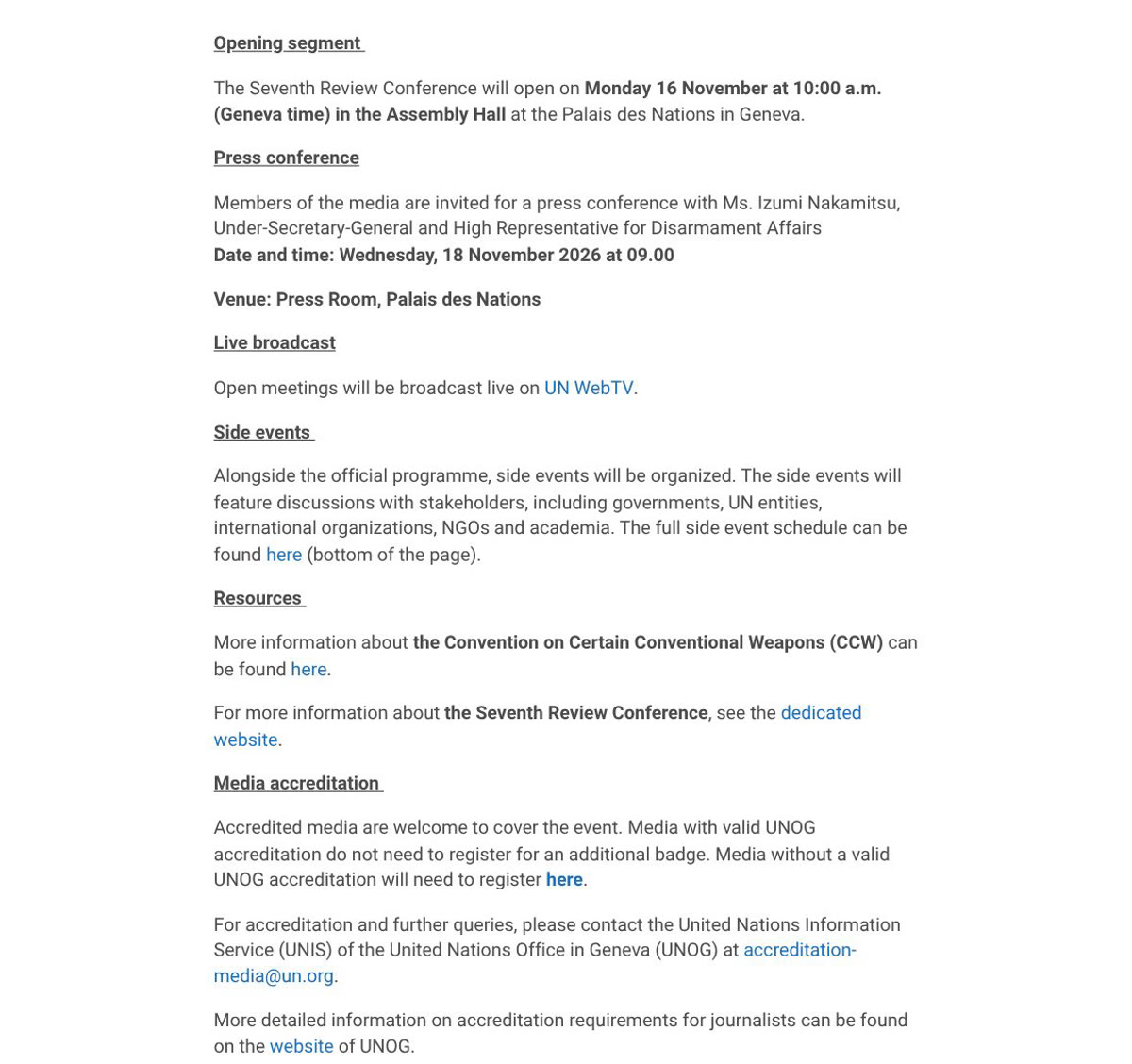
The rest of the same press release. Image: United Nations
Reuters reported that the deal commits countries to keep working on rules for up to two more years, with the question of whether they will be binding still unanswered. Anadolu reported that the expert group must develop an instrument and also recommend its legal form. The Red Cross said there was no clear, immediate mandate to negotiate a legally binding one.
The final document was not public when we checked on 22 November, so the exact mandate wording and next meeting date are unconfirmed.
Why the Red Cross calls it a missed opportunity
The International Committee of the Red Cross (ICRC) was blunt. “While an opportunity has been missed, the imperative to act remains,” it said. It wants a binding treaty that bans unpredictable autonomous weapons and those that directly target people, and limits all others.
It pointed to a clear signal from the UN: 163 states backed a call to negotiate an instrument in a General Assembly committee vote in October 2026.
Inside the Convention, though, decisions need consensus, so one country can block. Reuters reported that the United States, Russia and Israel opposed binding rules, and that about 100 countries backed them. These are Reuters’ reports, not an official UN record.
UN disarmament chief Izumi Nakamitsu told reporters in Geneva the result was a “significant achievement”, Anadolu reported. The path to a legally binding instrument “is still open; it’s not closed,” she said. She also said she was disappointed that a review of how the Convention is applied did not happen, because of procedural disagreements.
Amnesty International called the outcome a wasted opportunity. It said a treaty should probably now be pursued outside the CCW, as with the bans on landmines and cluster munitions. That is a campaign position, not a decision anyone has taken.
Below is the UN’s own explainer from August: background on the debate, not footage of this week’s result.

If you use or build AI, why a Geneva meeting reaches you
Bernama-dpa and Hurriyet reported that the Secretary-General urged delegates to prevent the use and spread of these “merciless weapons”. We cannot confirm that autonomous weapons have killed anyone, and swissinfo reported in September that the UN and the Red Cross could not confirm such use. The worry is about where the technology is heading.
The practical point is accountability. No global rule yet says a person must make the final decision before a machine uses lethal force, and national rules differ.
Our analysis: computer vision, drones and AI software also appear in everyday products, so weapons rules may shape what is expected of the companies that build them. If you work in this field, the expert group’s September report is worth reading: it lists possible rules such as human responsibility for the use of force.
In our reading: slow progress, real doubt
There is something fair in the cautious result. Work continues, and a UN official says binding rules remain possible. For a body that needs every country to agree, even agreeing on a mandate is a step.
The doubt is also fair. Two more years is long when the technology moves quickly. A mandate that leaves the legal form open also gives the most hesitant countries room to keep it non-binding.
On balance, the likelier outcome is more drafting than law in the near term, unless countries decide to move outside the CCW. That is our reading, not a fact.
The next date to circle
Watch for the published mandate text, and for any group of countries starting talks outside the Convention. Until then, 2028 is the checkpoint.
Prefer to watch? Follow us on YouTube
The tech stories that matter, explained in plain words. Subscribe so you never miss one.
Quick answers
What are killer robots?
It is a popular name for lethal autonomous weapons systems: weapons that select and attack targets without a person deciding each strike.
Is there a treaty on autonomous weapons?
No. The November 2026 talks did not launch treaty negotiations. Countries gave experts two more years to work on an instrument.
Which countries opposed binding rules?
Reuters reported that the United States, Russia and Israel opposed legally binding rules, while about 100 countries backed them. There was no vote, and the UN has not published country positions from these talks.
What happens next?
An expert group will work for two years to develop an instrument and recommend what legal form it should take. We could not find the final document, so exact meeting dates are not confirmed.
Words to know
- CCW
- The Convention on Certain Conventional Weapons, a 1980 UN treaty on weapons that cause unnecessary suffering.
- Lethal autonomous weapon system
- A weapon that selects and attacks targets without human intervention.
- Mandate
- The official task and time limit countries give a group.
- Legally binding
- A rule countries must obey once they sign up to it.
- Consensus
- Every country must agree, so one country can block a decision.
Sources (13): every key fact checked against at least two
- ICRC: ICRC renews urgent call for legally binding rules on autonomous weapons (20 Nov 2026)
- UN Geneva: Seventh Review Conference of the CCW, press release (10 Nov 2026)
- UN News: renewed call by the Secretary-General and ICRC President (25 Aug 2026)
- UN News: joint call for a treaty by 2026 (5 Oct 2023)
- UNODA: Group of Governmental Experts on LAWS, 2026
- UN Geneva explained: Should machines make decisions?
- Reuters via Arab News: States agree to UN talks aiming to regulate killer robots by 2028
- Anadolu: UN sees progress on autonomous weapons regulation despite lack of binding treaty mandate
- Amnesty International: failure to launch negotiations on an autonomous weapons treaty is a wasted opportunity
- Gizmodo: International talks on autonomous killer robots achieve historic deal to think it over for 2 more years
- Bernama-dpa: Guterres message to the Review Conference (16 Nov 2026)
- SWI swissinfo.ch: Will killer robots be banned after a conference in Geneva? (9 Sep 2026)
- Hurriyet Daily News: UN chief urges action to rein in 'merciless' autonomous weapons (16 Nov 2026)
Related stories

Tesla starts rolling out FSD v15 to first owners, and Musk says wide release comes in December
Tesla FSD v15 began reaching early-access owners on 21 November. Release date, HW3 left out, Reality View, and what Tesla has not yet shown.
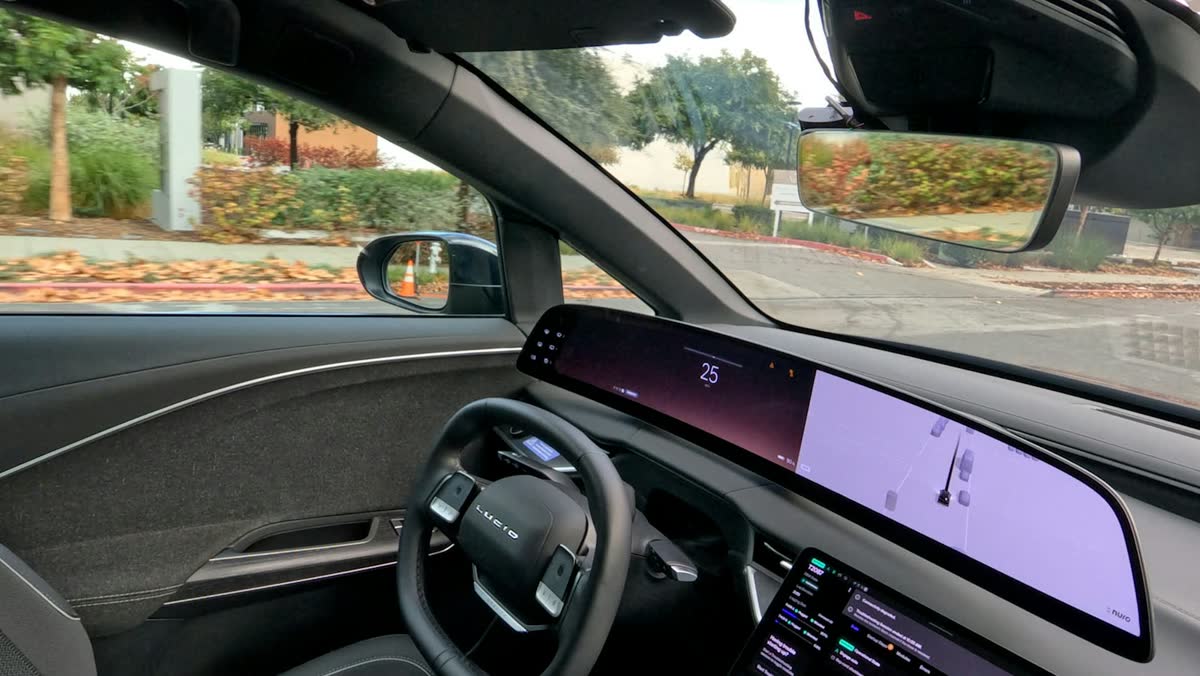
Uber, Nuro and Lucid take the safety driver out of their robotaxi, but public rides wait until 2027
The Uber Nuro Lucid robotaxi is now testing with no one at the wheel in four Bay Area cities. Public rides on Uber are planned for Q1 2027.

Did a patch rush cause November's tech outages? Officials point to it; companies have not said so
Tech outages hit banks, Microsoft, Apple and the NSA in one week. Officials point to a patch rush. No company has said so. Here is what we know.