Alphabet Q3 2026 earnings: Google Cloud doubles, but AI building pushes cash flow below zero
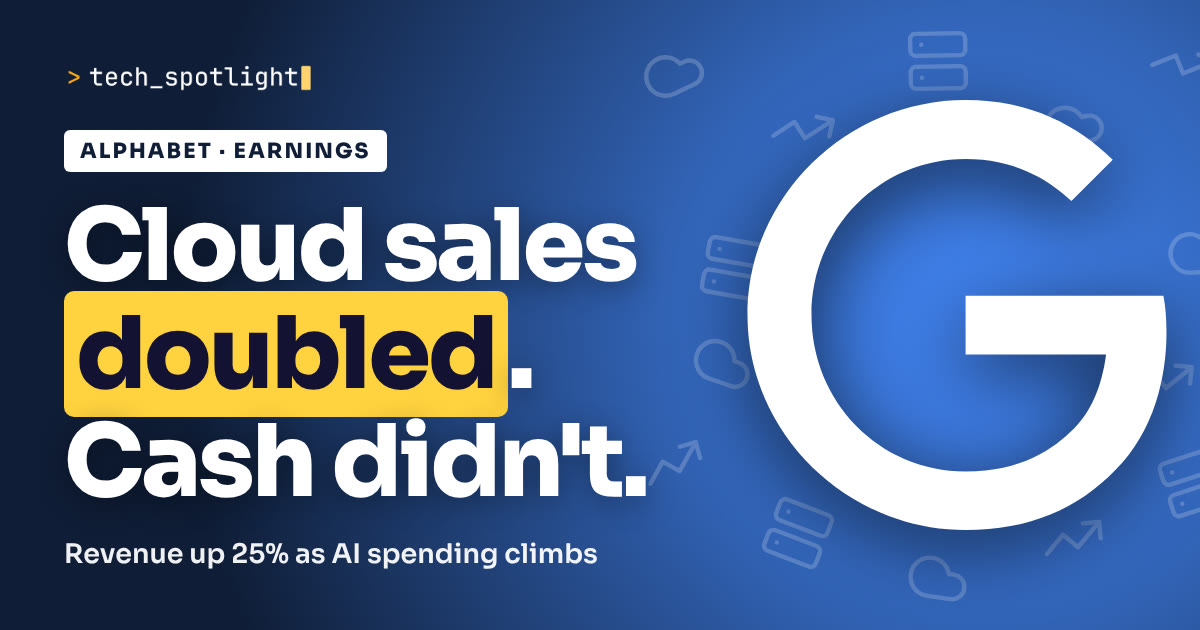
- Alphabet's revenue rose 25% to US$127.6 billion in July to September, and Google Cloud sales more than doubled to US$30.7 billion.
- Net profit fell 25% to US$26.2 billion, mainly because of losses on investments, while the main businesses earned more than a year ago.
- Spending on data centres and chips (US$51.4 billion) was bigger than the cash the business brought in, so free cash flow was negative for a second quarter.
If you searched for something today, watched a YouTube video or asked the Gemini app a question, you were part of this story. Behind those moments sits a fast-growing network of Google data centres built for AI. Building it now costs more cash than the business brings in.
The Alphabet Q3 earnings 2026 figures, released on 28 October, show both sides at once. Revenue rose 25% to US$127.6 billion. Google Cloud, which rents computing power to other companies, more than doubled its sales. But Alphabet spent US$51.4 billion on buildings, servers and chips in the quarter, more than its operations earned in cash.
Alphabet Q3 earnings 2026: the numbers behind the 25%
Alphabet’s official release, filed with the US Securities and Exchange Commission, covers July to September:
- Revenue: US$127.6 billion, up from US$102.3 billion a year ago. It is the 13th quarter in a row of double-digit growth.
- Google Cloud: US$30.7 billion, up 103% from US$15.2 billion. Its operating profit tripled to US$11.1 billion. Sales of TPU systems, Google’s own AI chips, were “a meaningful contributor”, the company says.
- Search and other: US$63.4 billion, up 12%. Alphabet says search queries grew at their fastest rate in five years.
- YouTube ads: US$11.2 billion, up from US$10.3 billion.
- Operating income: US$40.6 billion, up 30%, a margin of 31.8%.
- Net income: US$26.2 billion, down from US$35.0 billion. Earnings per share were US$2.12, against US$2.87.
Sundar Pichai, chief executive of Google and Alphabet, said the company is now on “a half-trillion dollar revenue run rate”. He also said the Gemini app has reached one billion users, which he called “the fastest-growing product in Google’s history”. On the same day, Google introduced a new model, Gemini 4 Carbon, available first to a small group of security specialists.
Why profit fell while the business grew
The drop in net profit does not come from weaker sales. It comes mainly from losses on investments. A year ago, the shares Alphabet holds in other companies rose in value and added US$10.7 billion. This quarter they fell and took away US$8.7 billion. The release says that swing alone cut net income by US$6.7 billion.
In plain words: the main businesses earned more. The paper value of investments moved the other way.
Paying for the build-out: debt, new shares and no buybacks
The harder number is cash. Free cash flow is the money left after paying for new equipment. It was minus US$9.1 billion this quarter, after minus US$5.9 billion in the second quarter. Alphabet capex (capital spending on property and equipment) reached US$132 billion in the first nine months of 2026, more than double the same period last year.
To pay for it, Alphabet changed how it uses money. It bought back no shares this quarter, against US$11.5 billion a year ago. It raised US$12.4 billion by selling new shares on the market and US$28.7 billion from new bonds. Long-term debt is now US$125.1 billion, up from US$46.5 billion at the end of 2025.
Meta, too, is finding new ways to raise money, as its third-quarter results showed last week.
If you use Google, build on it or own it through a fund
For everyday users, AI is now at the centre of Google, not a side project. Alphabet reports its fastest search growth in five years, which suggests AI answers are adding to search use, at least for now.
For businesses and developers, Google Cloud demand is strong and Google is adding capacity fast. Watch prices and waiting times for AI computing.
For savers, many index funds and pension plans hold Alphabet. The profit drop is mostly about investment values. The bigger question is cash, and new shares mean each existing share owns a slightly smaller slice of the company. This is not investment advice.
Strong demand, but the bill arrives first
On balance, this is a company growing well and spending ahead of that growth. Cloud sales doubling is hard evidence that customers want the capacity Google is building. A margin above 30% shows a healthy core.
The risk is timing. Chip and memory suppliers such as SK hynix are posting record profits from this kind of spending. Alphabet itself must wait for the return. If demand slows, debt and new shares are harder to reverse than a paused buyback, a worry we explored in the AI data-centre shakeout. The likelier outcome, in our analysis, is that Alphabet can carry this for some time, but the patience of investors will depend on cash flow turning positive again.
The number to watch next quarter
Next quarter, look first at free cash flow. If it stays below zero while Cloud keeps doubling, the build-out is still ahead of the business. If it turns positive, the bet is paying its own way.
Sources (3): every key fact checked against at least two
Related stories

eBay Q3 2026 earnings: collectibles, live shopping and Depop lift revenue 14%, a week after job cuts
eBay Q3 earnings 2026: revenue rose 14% to $3.2 billion, beating its forecast, a week after eBay said it would cut 9% of staff. Here's what drove it.
Microsoft Q1 2027 earnings: Azure grows 48% as AI demand rises, while Windows PC sales fall 22%
Microsoft Q1 2027 earnings: revenue rose 19% to US$92.3bn and Azure grew 48%, but Windows PC revenue fell 22%. What it means for users and savers.

Jio Platforms opens 21% above its IPO price and becomes India's second most valuable company
Jio Platforms listing price was ₹1,358, 21% above the ₹1,119 IPO price, making it India's No. 2 company by value. What it means for users and investors.