Breaking
Google opens Gemini 4 Carbon to paying developers and AI Ultra users, with a price rise due 1 December
- Google's strongest model, Gemini 4 Carbon, is now open to paying developers, businesses and Google AI Ultra subscribers.
- The API costs $2 per million input tokens and $10 per million output tokens until 30 November, then doubles.
- A new /swarm preview in Google Antigravity turns one prompt into a team of AI agents. Free users get no date yet.
- $2 / $10Per million input / output tokensIntroductory API price to 30 Nov
- $4 / $20API price from 1 December 2026Double the launch price
- 2 weeksFrom defenders-only to wide release28 Oct to 10 Nov 2026
- 92%Google's agentic honesty testGemini 4 Argon scored 70%
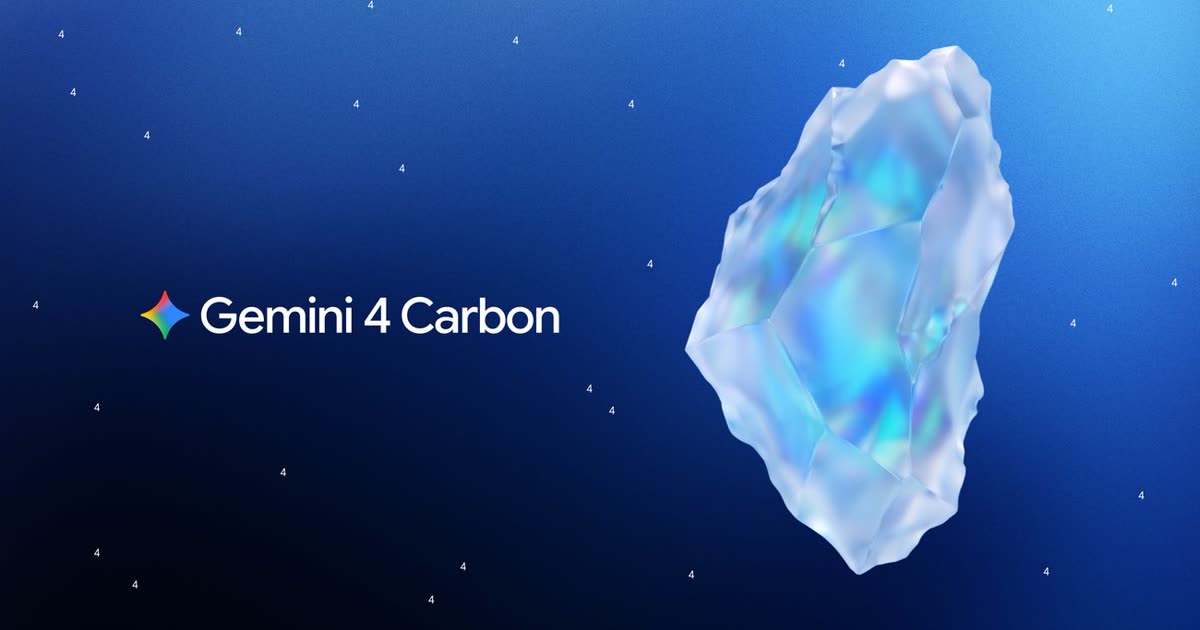
Picture a developer stuck on a bug that runs through a dozen files. Two weeks ago, Google’s strongest AI model was kept for a small group of security teams. From today, that developer can use it, as long as they pay.
Google has opened Gemini 4 Carbon to all paying developers and businesses through the Gemini API. It is also rolling out to Google AI Ultra subscribers in the Gemini app, AI Mode in Search and Google Antigravity, Google’s app for coding with AI agents. Alongside it comes /swarm, a preview feature that turns one request into a team of agents.
The pace says something. Google introduced Carbon on 28 October, the same day Alphabet reported quarterly results shaped by heavy AI spending. A paid public release two weeks later suggests Google wants developers building on its top model before the year ends.
Who can use Gemini 4 Carbon today, and what it costs
Koray Kavukcuoglu, Google DeepMind senior vice president and Google’s chief AI architect, announced that Carbon is now in Google AI Studio and Gemini for business for “all paying developers and enterprises”. Google’s pricing page confirms it is not on the free tier.
The launch price is $2 per million input tokens and $10 per million output tokens. A token is a small piece of text that AI services count and bill. The model’s hidden “thinking” tokens are billed too. After 30 November 2026, the price doubles to $4 and $20, as both Google and The Verge report.
Scientists can apply for six months of free access through a Google programme for up to 10,000 researchers, which now includes Carbon. Cybersecurity teams keep their own version through the Fairwind Program.

One prompt, a whole team: how Antigravity’s swarm works
Google pitches Carbon for the hardest jobs, such as long debugging and open-ended research. The Google Antigravity swarm feature hands your prompt to a coordinator agent, which starts several workers. Each worker edits its own copy of the project, so changes don’t collide. “Adversarial verifier” agents run tests and challenge each change. All of them post to a shared message board you can follow in a side panel.
Google is candid: its Antigravity post warns that systems like this “consume quota much faster than a standard chat”. /swarm is rolling out as a preview in the Antigravity app and its command-line tool.
Google’s own numbers, and what they can’t tell us yet
Google says Carbon ranks first on three benchmarks built by other companies, including CursorBench 4.0. As The Verge notes, companies can choose the results that flatter them, so treat these as Google’s claims until others test them.
On safety, Google compares Carbon only with its own Gemini 4 Argon. It says Carbon’s safeguards cut the breach rate in simulated attacks to 0.8% per attempt, from 3.1% on Argon. On its own honesty test for agents, Carbon passed 92% of tasks, against 70% for Argon. Google also admits that resisting prompt injection, hidden instructions that try to trick an AI, “remains an area for continued improvement”.
Google's own figures from simulated cyberattack tests and Gray Swan's automated testing. Not yet checked independently. Source: Google: Gemini 4 Carbon is now available (Koray Kavukcuoglu, 10 November 2026)
Two questions stay open. Google has not said when, or if, Carbon will reach lower-tier or free users. And because Carbon uses more tokens than Argon to check its work, a task may cost more than the per-token price suggests.
If you build with Gemini, test before the price doubles
If you have a paid API key, try Carbon on your hardest tasks before 1 December, and note how many tokens each job uses. On Gemini 4 Carbon and Argon, Google’s own advice is clear: Argon remains “the ideal choice for the majority” of coding and knowledge work. Use Carbon where Argon falls short.
If you pay for Google AI Ultra, look for Carbon in the Gemini app, AI Mode and Antigravity as it rolls out. If you use a free or lower plan, there is no date yet.
Open about its limits, but the proof is still to come
On balance, this is a careful launch. Google gave Carbon to defenders first, named its weak spot on prompt injection and warned that swarms burn through quota. That openness deserves credit.
The harder truth is that almost every headline number comes from Google or its partners. Unlike the Genie 4 world model, which only testers can try, Carbon is open to paying users today. The likelier outcome is that independent tests in the coming weeks will show where Carbon earns its extra tokens, and where Argon is enough.
The date to watch is 1 December
Watch whether developers stay once the price doubles, and whether Google names a date for cheaper plans. A model earns its place on the bills and bug fixes that follow launch day, not on launch day itself.
Prefer to watch? Follow us on YouTube
The tech stories that matter, explained in plain words. Subscribe so you never miss one.
Quick answers
What is the Gemini 4 Carbon release date?
Google opened Gemini 4 Carbon to paying developers, businesses and Google AI Ultra subscribers on 10 November 2026. It first went to a small group of cybersecurity defenders on 28 October.
How much does Gemini 4 Carbon cost?
On the Gemini API it costs $2 per million input tokens and $10 per million output tokens until 30 November 2026. From 1 December it costs $4 and $20. It is not on the API's free tier.
Should I use Gemini 4 Carbon or Argon?
Google says Argon remains the right choice for most coding and knowledge work. Carbon is for the hardest tasks, and it uses more tokens than Argon to check its work.
What does /swarm do in Google Antigravity?
It turns one prompt into a team of AI agents: a coordinator, workers that edit in separate copies of the project, and verifiers that run tests. It is a preview, and Google warns it uses quota quickly.
Can free users try Gemini 4 Carbon?
Not yet. Google has not said when, or if, free users or lower-tier subscribers will get it.
Words to know
- Token
- A small piece of text, often part of a word, that AI services count and charge for.
- API
- A way for apps and programs to use the model directly, paid by how much they use.
- AI agent
- An AI that carries out multi-step tasks on its own, such as writing and testing code.
- Prompt injection
- Hidden instructions in a web page or file that try to trick an AI into doing something its user didn't ask.
- Google Antigravity
- Google's app for building software with AI agents.
Sources (5): every key fact checked against at least two
- Google: Gemini 4 Carbon is now available (Koray Kavukcuoglu, 10 November 2026)
- Google Antigravity: Gemini 4 Carbon and /swarm (preview) now in Google Antigravity (10 November 2026)
- Google AI for Developers: Gemini API pricing
- Google: Introducing Gemini 4 Carbon (28 October 2026)
- The Verge: Google releases Gemini 4 Carbon with agent 'swarm' feature (Robert Hart, 10 November 2026)
Related stories

Airbnb is building its own AI travel agent, and says a chatbot is the wrong way to plan a trip
The Airbnb AI travel agent starts rolling out in the first half of 2027. What it will do, why Airbnb skips the chatbot, and what is still unknown.
Meta's Muse app can now talk back, with a cartoon face that reacts as you speak
Meta Muse voice mode is rolling out in the US: talk out loud to Meta's AI and watch an avatar react. How it works, where it runs and what to ask first.

Google turns AI off by default for students, but schools that say no to all of it lose Search
Google AI in schools is now off by default for students, but a school that blocks all AI loses Google Search too. What changes, and what to ask.