Marvell agrees a $115bn deal for laser maker Lumentum, betting AI will run on light
- Chipmaker Marvell agreed to buy laser maker Lumentum in an all-stock deal valued at about US$115 billion.
- The bet is that AI data centres will switch from copper wires to light to move data between chips.
- Investors were unsure: Marvell fell 12.7% and Lumentum 18.6% on 2 November, and the deal will not close before 2028.
Every time you ask an AI chatbot a question, thousands of chips inside a data centre pass data to each other. Most of that still travels down copper wires. Marvell, an American chipmaker, has just bet about US$115 billion that the future runs on light instead.
The Marvell Lumentum deal, announced on Monday, 2 November, is an all-stock offer for Lumentum, a maker of lasers and optical parts. It is one of the biggest tech deals of 2026, but investors did not cheer the Marvell Lumentum merger: both stocks fell sharply.
How the $115 billion Marvell Lumentum deal works
The companies’ joint announcement sets out the terms:
- The swap: each Lumentum share becomes 4.5 Marvell shares. No cash changes hands.
- The price: an implied value of US$115 billion, or about US$1,132 per Lumentum share. That is a premium of about 23.9% on the closing price of 28 October, the last day before talk of a deal began.
- Who owns what: Marvell’s current shareholders would own about 67% of the combined company, and Lumentum’s about 33%.
- Who leads: Matt Murphy stays chairman and chief executive. Three Lumentum directors, including chief executive Michael Hurlston, join Marvell’s board.
- When: the first half of 2028, if shareholders and regulators approve. Both boards backed it unanimously.
For scale, Calcalist notes it is Marvell’s largest deal since it bought Inphi for about US$10 billion in 2021. This one is more than ten times bigger.
Why a chipmaker wants a laser company
Marvell makes chips that move data around data centres, plus custom AI chips. Lumentum makes the lasers and optical transceivers (small parts that turn electrical signals into light) that carry data down fibre-optic cables. It also runs its own factories for indium phosphide, a material used to make those lasers.
The companies argue that copper wires are reaching their physical limits as AI systems grow. In general, light can carry more data over longer distances. “AI infrastructure is undergoing a fundamental architectural shift toward optical connectivity, creating an opportunity that comes along once in a generation,” Murphy said.
The companies also claim a US$550 billion market and more than US$1 billion a year in cost savings. They expect higher earnings per share for Marvell in the first year after closing. These are forecasts, not results.
Lumentum arrives strong. Its quarter to 26 September brought in US$1.26 billion, up 136.5% on a year earlier, according to its own results and TIKR.
Why Marvell stock and Lumentum stock both fell
On 2 November, Marvell stock closed down 12.7% at US$171.41, and Lumentum stock fell 18.6% to US$684.40, according to TIKR.
Because Lumentum owners are paid in Marvell shares, the deal’s value moves with Marvell’s price. At Monday’s close, 4.5 Marvell shares were worth about US$771, well below the US$1,132 headline figure.
Moneywise reported two main worries among investors. Some think Marvell paid too much for a company whose shares had risen more than 450% in a year. Others raised concerns about “circular” financing in AI, where large AI firms invest in their own partners and customers.
What the Marvell acquisition of Lumentum means for you
Most of us will never buy a laser, but the parts that move data inside data centres shape what AI costs to run and how much power it uses. Those costs reach you through cloud prices, subscription fees and electricity demand.
If you own either stock, directly or through a fund, the key fact is the fixed swap: the value of the offer rises and falls with Marvell’s share price for the next year or more. If you work in tech, expect more talk of optical connectivity for AI, sometimes called “co-packaged optics”, in data centre plans.
A sound idea with a long and uncertain road
On balance, the logic is easy to follow. As we saw in SK hynix’s record AI memory quarter and TSMC’s latest results, the money in AI is spreading from the main chips to everything around them. Moving data is part of that, and Lumentum is growing fast.
The harder part is time. This deal is not expected to close until 2028. That is a long wait in a market that changes every quarter. Kioxia’s fall of almost 16% on a flat outlook shows how quickly investors react when AI growth looks like slowing. In our reading, deals of this size tend to face close review in several countries, which can add delay or conditions. The companies have not named any regulator.
The likelier outcome is that the strategy makes sense, while the price stays a matter of debate until the AI spending cycle shows where it is heading.
Next come the shareholder votes and the first regulatory filings. The real test is simpler: whether data centre builders keep choosing light over copper.
Sources (8): every key fact checked against at least two
- Marvell: Marvell and Lumentum to combine, creating a category leader in AI connectivity (2 Nov 2026)
- Lumentum: Marvell and Lumentum to combine (2 Nov 2026)
- Lumentum: First quarter of fiscal year 2027 financial results
- Calcalist: Marvell to buy Lumentum
- Yahoo Finance: Marvell to purchase Lumentum in $115 billion deal
- TIKR: Lumentum sinks 19% on $115 billion all-stock Marvell deal
- IBTimes: Marvell to acquire Lumentum
- Moneywise via Yahoo Finance: Marvell's $115 billion Lumentum acquisition
Related stories
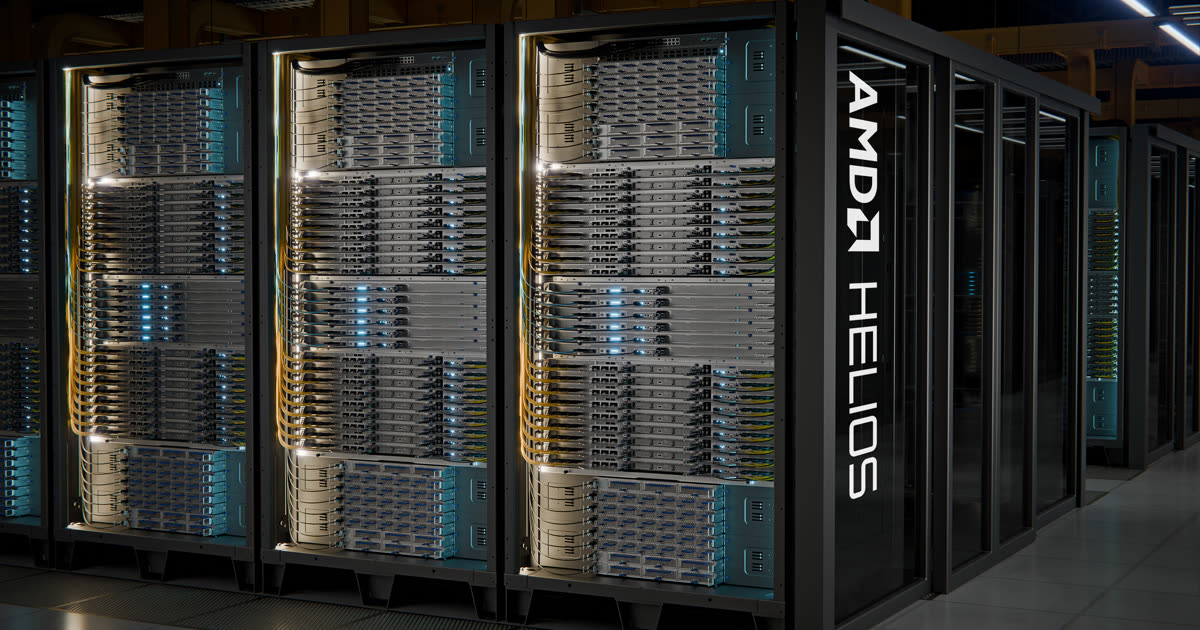
AMD's AI chip sales nearly double, and it expects a US$17 billion quarter as Helios racks ship
AMD earnings: Q3 sales rose 45% to a record US$13.4bn as data centre revenue nearly doubled, and AMD expects about US$17bn next quarter.

Canva layoffs: a restructure touches 22% of staff as growth slows
Canva layoffs: 1,271 people, 22% of staff, face job cuts, new roles or moves to hubs as growth slows. What we know, what we don't, and what to watch.
Apple Q4 2026 earnings: a record year, but memory costs and iPhone Duo supply soften the holiday outlook
Apple Q4 2026 earnings: revenue rose 12% to US$114.5bn to cap a record year, but memory costs and iPhone Duo supply cloud the holiday outlook.