Almost all the world's shallow coral reefs face a high risk of collapse by 2075, IUCN finds
- IUCN's first global check of coral reef ecosystems finds 96% of shallow reefs Critically Endangered, at extremely high risk of collapse by 2075.
- Ocean heat is the main threat. Overfishing, pollution and coastal building add to it.
- On past trends alone the share would be 24%, not 96%. Scientists say that gap is the window to act.
Off the western Galápagos Islands, one reef system is already gone. IUCN has listed it as Collapsed since the 1982-83 El Niño, a burst of ocean heat that killed its corals. A new global check now says nearly every shallow reef on Earth is on a path that could end the same way.
On 22 October, IUCN, the International Union for Conservation of Nature, published its first global Red List of Ecosystems assessment for coral reefs. It found that 96% of the shallow, warm-water reef ecosystems it assessed are Critically Endangered, the highest threat level, with an extremely high risk that these coral reefs collapse by 2075. It also found that much of that risk has not happened yet.
Reefs support about a quarter of all marine species, according to IUCN and the Associated Press (AP). They also feed coastal families, bring in tourists and shield shores from storms. So this is a story about people as much as corals.
127 reef regions checked, and the famous ones are all in the red
The assessment covers 127 tropical and subtropical regions and 188,362 km² of reefs, about 72,700 square miles. IUCN led it with the University of Melbourne, CORDIO East Africa and more than 250 experts, covering reefs in over 80 countries and territories.
The Great Barrier Reef, the Coral Triangle in Southeast Asia, the Mesoamerican Barrier Reef and the Red Sea reefs are all rated Critically Endangered. Four regions lacked enough data to rate. The western Galápagos is the one already listed as Collapsed.
So what happens if coral reefs collapse? IUCN says the hard corals that build a reef almost vanish, and algae, rubble and sponges take over. Far fewer fish, turtles and sharks can live there.
A separate IUCN Red List check of 892 reef-building coral species found 44% threatened with extinction.
Why coral reefs collapse: heat first, local pressures second
Why are coral reefs declining? IUCN calls heat stress from climate change “the single most consistent threat”. Marine heatwaves cause mass bleaching: stressed corals lose the tiny algae that feed them, turn white, and often die.
The assessment assumes the IPCC’s “middle-of-the-road” path, about 2.7°C of warming by 2100. IUCN adds that overfishing of parrotfish and grouper threatens 63% of reef ecosystems. These fish keep algae in check. Pollution, coastal building, overtourism, storms and coral-eating starfish add to the strain.
The data behind it joins decades of reef surveys with satellite sea-temperature records.
The 24% figure that shows the window is still open
Based only on what happened over the past 50 years, without future warming, IUCN says 24% of reef ecosystems would be Critically Endangered, not 96%. In East Asia it would be 20%. The northern Red Sea, whose reefs handle heat unusually well, would rate only Vulnerable.
“This must be a wake-up call rather than a cause for despair,” said Dr Mishal Gudka, research director at CORDIO East Africa and the assessment’s scientific lead. Reefs, he said, have shown “a remarkable ability to bounce back” from bleaching.
Two cautions. We could not find a peer-reviewed paper behind this assessment yet. And the 96% rests on one warming path; a cooler one would change the outcome, which is IUCN’s point.
If you live by the sea, or simply love it
Are coral reefs dying everywhere? Not yet, which is why local action counts. Gudka says authorities can help by keeping coastal water clean and fishing sustainable. Near a reef, local rules on waste water, fishing and marine parks matter. On holiday, pick a careful dive or snorkel operator. Buying reef fish? Ask how it was caught.
The biggest lever is still emissions, which sits with governments and companies. You can watch what your own country promises, and whether it delivers.
A warning with a window, not an obituary
On balance, this assessment deserves to be taken seriously. It is the first global look, built by hundreds of experts, and honest about its limits. The “past trends” figure is not a loophole; it shows how much is still a choice.
The hard part is that the main fix is global. Andrew Baker, who directs the Coral Reef Futures Lab at the University of Miami, told AP that restoring corals with new technology could “buy us critically needed time”. In practice, such projects are still small next to the world’s reefs.
A warmer ocean also speeds ice loss under Antarctica’s Thwaites Glacier, a reminder that ocean heat links stories that look far apart. And Brazil’s record-low Amazon deforestation shows that steady policy can bend a curve that looked fixed.
The likelier reading: 96% is a forecast of one path, not a verdict.
Watch the next climate promises, the next marine heatwaves and IUCN’s future reassessments. Each will show whether reefs are heading toward 24%, or toward 96%.
Sources (3): every key fact checked against at least two
- IUCN: Virtually all coral reef ecosystems face high risk of collapse in 50 years, IUCN Red List of Ecosystems (22 October 2026)
- Associated Press (via WSLS): Almost all coral reef ecosystems face risk of collapse in 50 years, study warns (22 October 2026)
- Gizmodo: Earth's shallow coral reefs may have just 50 years left (October 2026)
Related stories
Wind turbines have killed about 18.7 million US bats since 1981, USGS-led study estimates
Wind turbines killing bats: a USGS-led study estimates 18.7 million US bat deaths since 1981, and shows how design, siting and slower blades can cut them.
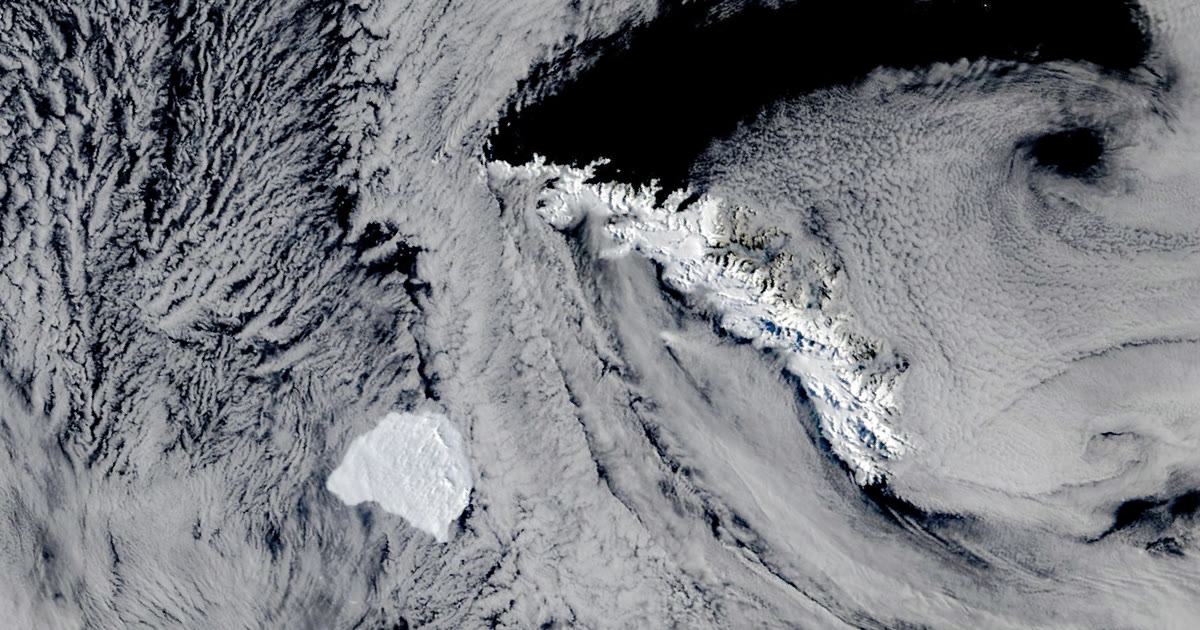
Iceberg A-81, a slab of Antarctic ice the size of a city, slows at the edge of South Georgia
A city-sized iceberg, A-81, has slowed off South Georgia after a 2,300 km drift. What satellites show, why sizes differ, and what is still unknown.

OpenAI says its AI disproved the Exponential Time Hypothesis, and two of the rule's authors will check it
Exponential Time Hypothesis: OpenAI says its AI proved the famous computing rule false. Experts, two of them its authors, are checking. What it means.