Breaking
China blocks SoftBank from buying ABB's China robot business; the fate of the US$5.4bn deal is unclear
- China's foreign-investment security review office has prohibited SoftBank from buying ABB's robotics business in China, ABB said on 5 November.
- It is one part of SoftBank's US$5.375bn deal for ABB's whole Robotics division, agreed in October 2025.
- ABB says the two companies are still "working constructively on the transaction". No new timetable has been given.
- US$5.375bnDeal value (enterprise value)agreed Oct 2025
- US$2.3bnRobotics revenue in 2024about 7% of ABB
- ~7,000Robotics employees
- US$150mABB's Shanghai robot factoryopened 2022
Somewhere in a factory in China, a robot arm made by ABB is welding, painting or packing today, as it did yesterday. What changed overnight is the question of who will own the business behind it.
China has blocked one key part of the SoftBank ABB Robotics deal. On 5 November, ABB said SoftBank had told it that China’s foreign-investment security review office “has prohibited the acquisition of the ABB Robotics business in China”. It is a public no from Beijing to a European-Japanese deal, and it lands where AI meets the physical world: factory robots.
What China stopped, and what it did not
The words matter here. ABB’s statement covers only the China business. It does not say the whole sale is off. ABB says it and SoftBank “are in close dialogue and are working constructively on the transaction”. SoftBank manages the approvals and has not published its own statement. ABB declined further comment on next steps, Handelsblatt reports.
Some headlines say China blocked SoftBank’s whole US$5.4 billion takeover. On the facts we have, that goes further than ABB’s statement does. The fairer reading today: China has closed the door to the China part, and what that means for the rest is not yet clear.
Inside the US$5.4bn SoftBank ABB Robotics bet
So who is ABB Robotics being sold to? ABB agreed on 8 October 2025 to sell its Robotics division to SoftBank Group for an enterprise value of US$5.375 billion. The sale has not closed yet. The division had US$2.3 billion of revenue in 2024, about 7% of ABB’s total, and around 7,000 staff. ABB expected the deal to close in mid-to-late 2026. It dropped an earlier plan, announced in April 2025, to list Robotics as a separate company.
SoftBank chief executive Masayoshi Son framed the purchase simply. “SoftBank’s next frontier is Physical AI,” he said. ABB chief executive Morten Wierod said SoftBank would be “an excellent new home for the business and its employees”. ABB expected about US$5.3 billion in cash from the sale.
Why China matters so much to ABB Robotics
ABB itself calls China the world’s largest robotics market. In 2022 it opened a US$150 million robot “mega factory” in Shanghai, covering 67,000 square metres.
China has not given a reason for its decision. Rumour: The Financial Times, citing unnamed sources, reports that China is the division’s biggest market. It says Beijing worried that data from robot production could leave the country. That data could help train AI models abroad, including at OpenAI, where SoftBank is a large investor. Bloomberg reports that China’s planning agency opposed the deal. Neither China’s government nor SoftBank has confirmed these reports.
This fits a wider pattern. China recently proposed export curbs on 40 AI, solar and biotech technologies. In our reading, governments now treat chips, and increasingly robots and their data, as national-security matters.
If your factory runs on ABB robots
For now, very little changes on the factory floor. ABB still owns its Robotics division, in China and everywhere else, so service and spare parts should carry on as before. The open question is longer term: who will own the China unit, and will it stay closely linked to the rest of the business?
If you buy robots or plan a new production line, it is worth asking your ABB contact how service contracts would be handled under any new owner. If you hold ABB or SoftBank shares, watch for a statement on how, or whether, the deal goes ahead without China.
A setback for SoftBank’s robot plans, not the end of them
There is a fair case on both sides. China has every right to check deals that touch its factories, and robots that see and learn inside them are a new kind of sensitive asset. But a buyer that cannot own a division’s biggest market is buying a smaller, more complicated business. That could change the price, the timing, or the shape of the deal.
On balance, our reading is that the likelier outcome is a narrower deal, for example SoftBank buying everything outside China while ABB keeps or sells the China unit on its own. That is analysis, not a forecast. Both companies say they are still talking, and that is a reason for calm. The wider race to build robots is not slowing either: Tesla, for one, began producing its Optimus robot this year.
The next sign to watch is simple: a new timetable from ABB and SoftBank, or a first word from Beijing on why it said no.
Prefer to watch? Follow us on YouTube
The tech stories that matter, explained in plain words. Subscribe so you never miss one.
Quick answers
Who is buying ABB Robotics?
SoftBank Group agreed in October 2025 to buy ABB's Robotics division for an enterprise value of US$5.375bn. The deal has not closed.
Did China block the whole SoftBank ABB Robotics deal?
No. ABB says China prohibited the purchase of the ABB Robotics business in China. ABB and SoftBank say they are still working on the transaction.
Why did China block it?
China has not published a reason. The Financial Times reports concerns about robot data leaving China; that report is not confirmed.
What happens to ABB Robotics now?
ABB still owns it, and no new timetable or ending of the deal has been announced. Our reading is that the China part may need a separate answer.
Words to know
- Enterprise value
- The price of a whole business, including its debts, minus its cash.
- Foreign investment security review
- China's check, run by its planning agency and Commerce Ministry, of foreign deals that could touch national security.
- Physical AI
- AI that acts in the real world through machines such as robots.
- Spin-off
- When a company turns a division into a separate company with its own shares.
Sources (8): every key fact checked against at least two
- ABB: Update on divestment of ABB Robotics (5 Nov 2026)
- ABB: ABB to divest Robotics division to SoftBank Group (8 Oct 2025)
- ABB: ABB opens robotics mega factory in Shanghai
- Financial Times: China blocks SoftBank's ABB robotics deal
- Nikkei Asia: China blocks SoftBank's $5.4bn deal for ABB robotics division
- Bloomberg: China blocks SoftBank's acquisition of ABB industrial robot unit
- Handelsblatt: China blocks sale of ABB's robotics division to SoftBank
- TechCrunch: SoftBank bulks up its robotics portfolio with ABB's robotics unit
Related stories

Qualcomm's phone-chip sales fall 26%, as car chips nearly double and a data-centre bet begins
Qualcomm earnings: phone-chip sales fell 26% last quarter, car chips hit a record, and a US$5bn data-centre goal starts in 2027. What it means for you.
3M will pay up to $7.35bn to settle most 'forever chemicals' injury claims
The 3M PFAS settlement pays up to $7.35bn over nine years for about 99% of US injury claims. What it covers, who may qualify and what we don't know yet.
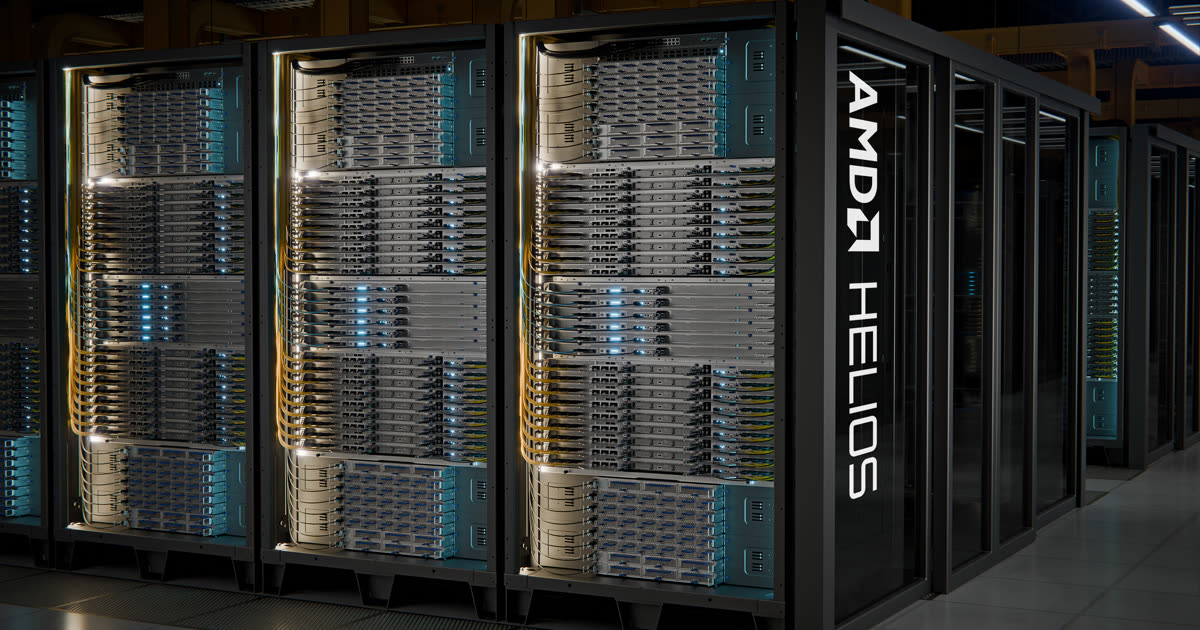
AMD's AI chip sales nearly double, and it expects a US$17 billion quarter as Helios racks ship
AMD earnings: Q3 sales rose 45% to a record US$13.4bn as data centre revenue nearly doubled, and AMD expects about US$17bn next quarter.