Nvidia puts US$3 billion into Meta's share sale as the two deepen work on Muse AI agents
- Nvidia will invest US$3 billion in Meta's new share sale and work more closely with Meta on Muse, its AI agent and family of models.
- Meta is selling about US$37.5 billion of shares now, at US$625 each, and plans up to US$60 billion more from 2027 to pay for AI.
- Nvidia also supplies Meta's chips, which raises a fair question about money moving in a circle. Neither says what Meta spends with Nvidia.
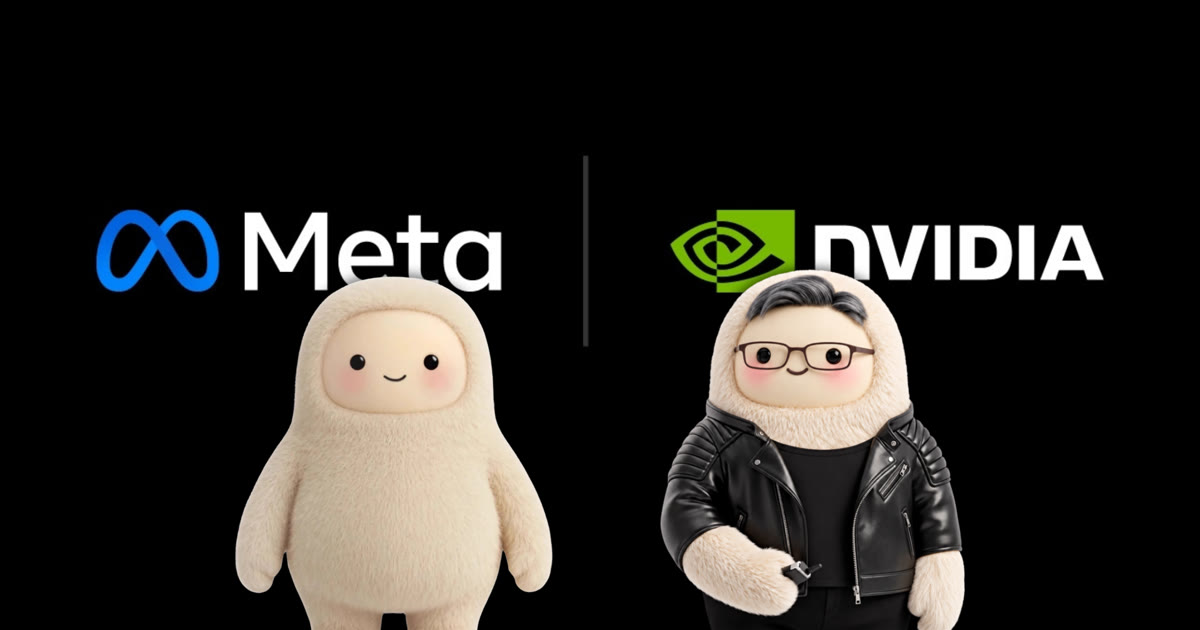
Picture a shop that sells you the ovens, then helps pay for your new bakery. That, in short, is the deal Nvidia and Meta announced this week. Nvidia, whose infrastructure already powers Meta’s Muse models, says it will invest US$3 billion in Meta’s new share sale.
The same release widens the Nvidia Meta partnership around Muse, Meta’s AI agent and the family of models behind it. It matters because it shows how even the richest tech companies now sell shares, not just borrow, to pay for AI. And the chip seller wants to be on both sides of that bill.
What Nvidia is buying into, and what Meta is selling
Nvidia’s release says the two will expand their work on Muse “to improve inference and training performance”. Inference is the work of answering each request; training is how a model learns. Meta will also deploy more Nvidia Vera Rubin systems and Vera processors, plus Nvidia’s Spectrum-X networking and BlueField-4 chips, which move data between machines.
Two other ideas are only under consideration: Nvidia OpenShell, for deploying AI agents safely, and Nvidia Sentry, for watching how agents behave.
Meta’s filings with the US Securities and Exchange Commission (SEC) fill in the money side. The Meta stock offering began on Monday with about US$35 billion of share sales. In a pricing filing the same day, it raised the common stock part from US$22.5 billion to US$25 billion, priced at US$625 a share. With US$12.5 billion of preferred shares that later turn into ordinary ones, the total now on sale is about US$37.5 billion. Both parts are due to settle on Thursday, 29 October.
Meta also plans to sell up to about US$60 billion more, little by little on the market, once its new Class C shares start trading. It says that should not begin before early 2027, and it may not happen at all.
Why so much? Meta expects to spend US$135-145 billion on buildings and equipment this year. That sits on top of the roughly US$825 billion in AI commitments it has already made. The filing names Nvidia, AMD and Broadcom as “cornerstone investors” that showed interest in up to US$5 billion of the shares, but it says those offers were not binding.
The question of money flowing in a circle
“AI agents represent a new computing paradigm,” said Jensen Huang, Nvidia’s founder and chief executive.
What neither company says is how much of Meta’s spending goes back to Nvidia. A supplier that invests in its biggest customers can help them keep buying. In practice, some of the US$3 billion may come back as chip orders. No one has shown that, and suppliers backing big customers is not unusual.
If you use Muse, or own shares, what changes
Muse already has reach. Meta says more than 10 million people in the US and Canada signed up in its first weeks, and that shopping is the top use, by over 25% of weekly users. Across its apps, 3.64 billion people use at least one every day.
For you as a user, the promise is faster, cheaper answers, and in time agents that can act for you. That is why the safety tools under discussion matter. When software can buy things for you, someone should watch what it does. Developers already have Muse Spark Open, an open model from the same family.
For shareholders, new shares mean each existing share owns a slightly smaller piece of Meta. The price was set just under Monday’s close of US$630.56.
Why the Nvidia Meta partnership makes sense, and where it could go wrong
On balance, the deal is sensible for both sides. Meta gets cash from a partner that believes in its plan, a vote of confidence at a useful moment. Nvidia locks in a growing customer and a closer seat at the table. Meta also has a strong base: US$97 billion of cash from operations in nine months, and about US$82 billion in cash and securities.
The risks are real too. Ties this close can blur. Investors will want clear numbers on what Meta buys from Nvidia. And a company planning to sell up to nearly US$100 billion of shares is betting that AI agents earn money soon. The squeeze already hitting smaller neocloud firms shows what happens when that bet runs late.
The likelier outcome is a steady, shared bet that works if Muse keeps growing and both companies stay open about the money between them.
What to watch after Thursday
Watch three things: whether the sale settles on 29 October as planned, whether OpenShell and Sentry move from “considering” to signed, and whether Meta ever puts a number on its Nvidia bill. The ovens are ordered. Now the bakery has to sell bread.
Sources (4): every key fact checked against at least two
- NVIDIA Newsroom: NVIDIA and Meta to Expand Collaboration on Muse and Muse Family of Models Amid Robust Growth
- Meta (SEC filing): Meta Announces Launch of Offering of Depositary Shares and Class A Common Stock
- Meta (SEC filing): Pricing term sheet for the Class A Common Stock and Series A Depositary Shares offerings
- Investing.com (via Yahoo Finance): Nvidia to invest $3 bln in Meta share offering as part of bigger AI partnership
Related stories
SK hynix earns a record quarter from AI memory, and says the shortage will last until 2030
SK hynix earnings: revenue passed 100 trillion won for the first time on AI memory demand, and the chipmaker says supply will stay short until 2030.
Intel agrees to buy Classiq, a bet that easy software will open up quantum computing
The Intel Classiq deal pairs Intel's quantum chips with Classiq's software. What Intel confirmed, the reported price, and what to watch before it closes.
Microsoft offers about 60,000 staff a paid way out. Here is what we know, and what we don't
The Microsoft voluntary exit offer reaches about 60,000 staff in four countries. Who qualifies, what is still unknown, and what to weigh before saying yes.