The US now lists helium as a critical material, a signal for chips, MRI scanners and quantum labs
- The US Energy Department has added helium to its list of critical materials, the 20th material on that list.
- It says helium cannot be replaced in chipmaking, gas pipeline leak testing and quantum computing, and is key for medical and scientific work.
- CBS News reports the move follows a global shortage. The label alone adds no new supply, so permits and refining are what to watch.
Most of us meet helium in a birthday balloon that sinks by morning. Far fewer of us see its other jobs. It is needed for hospital MRI scanners, for making the chips in our phones, and for quantum computing.
On 23 October, the US Department of Energy (DOE) said Energy Secretary Chris Wright had named helium a critical material under the Energy Act of 2020. The formal notice was signed on 21 October by Audrey Robertson, the department’s Assistant Secretary for Critical Minerals and Energy Innovation. The helium critical material label puts the gas on the same list as lithium, gallium and cobalt.
Why does this matter now? Because the world has been short of helium for months. Calling something critical means its supply is both essential and fragile.
Why helium is important enough for the critical list
Under US law, a critical material must face a high risk of supply disruption and serve an essential role in energy technology. DOE’s notice says helium is “non-substitutable” in several of those roles: making semiconductors, testing natural gas pipelines for leaks, and quantum computing. It adds that helium is essential to key medical and scientific work.
DOE says global demand is growing faster than production. The US has large deposits of natural gas rich in helium, the department says, but limited refining capacity and long permitting times hold back output.
Helium is now the 20th material on the department’s list, CBS News reports. The 2023 list held 18. Coal used in steelmaking was added in May 2025.
“Helium is essential to producing the semiconductors and advanced technologies that power our economy,” Wright said in the announcement.
The helium shortage of 2026 began in the Gulf
CBS News reports that the closure of the Strait of Hormuz in February trapped about a third of the world’s helium supply in the Persian Gulf. In March, Iranian strikes hit Ras Laffan, a site in Qatar that produces helium. CBS says a range of industries have felt the shortage since, even though the US is the world’s largest helium producer.
CBS adds that the designation came days after its 60 Minutes report on the Iran war’s effect on helium supply.
What the label changes, and what it leaves open
CBS reports that the designation makes more federal financing available to helium producers. DOE’s own announcement does not name a sum, a new plant or a timeline. It names the bottlenecks, refining and permits, but no plan to fix them.
In practice, lists like this usually work slowly. They steer loans, grants and official attention toward a material; they do not add supply in a week. A new refinery or a faster permit would count for more than the label itself.
Why helium is so expensive, and who feels it first
Why is helium so expensive right now? In short, DOE says demand is growing faster than supply and refining is limited, and CBS reports that a major supply route was cut off this year. Helium is also non-renewable, CBS notes.
Hospitals feel a helium shortage through MRI scanners, which CBS lists among the machines that need it. Chipmakers feel it too. TSMC just reported another record quarter on AI demand, and DOE says helium has no viable substitute in many parts of chip production. Quantum computing, the field behind research such as Google’s Willow chip, is also on DOE’s list of uses where helium cannot be replaced.
If you work in a clinic, a lab or a small business that relies on helium, wherever you live, a US label will not change your supply tomorrow. Ask your supplier how secure your contract is, and watch whether new US refining comes online.
A sensible signal that still needs refineries and permits
There is real good here. DOE names a true weak point, ties it to chips and health, and is honest that the limits are refining and permits, not rock in the ground. Governments everywhere now treat supply chains as strategy, as China showed when it proposed export curbs on 40 AI, solar and biotech technologies.
The harder part is what the announcement leaves out. A label does not process a single cubic foot of gas. The framing is also about American manufacturing first, while a shortage of a gas traded around the world reaches far beyond the US.
On balance, the helium critical material label is a sensible, overdue signal. Its value will depend on follow-through: permits granted, refineries built, and less helium wasted.
So the next time a party balloon drifts to the ceiling, remember what is inside it. The US government now counts that gas as critical. The test is whether more of it reaches the scanners and chip lines that cannot work without it.
Sources (4): every key fact checked against at least two
- US Department of Energy: Energy Department designates helium as a critical material (23 October 2026)
- US Department of Energy: Federal Register notice, Critical Material List; Addition of Helium (signed 21 October 2026, PDF)
- CBS News: Energy Department designates helium as a critical material (23 October 2026)
- RTTNews: US Energy Dept. designates helium as critical material (October 2026)
Related stories
Wind turbines have killed about 18.7 million US bats since 1981, USGS-led study estimates
Wind turbines killing bats: a USGS-led study estimates 18.7 million US bat deaths since 1981, and shows how design, siting and slower blades can cut them.
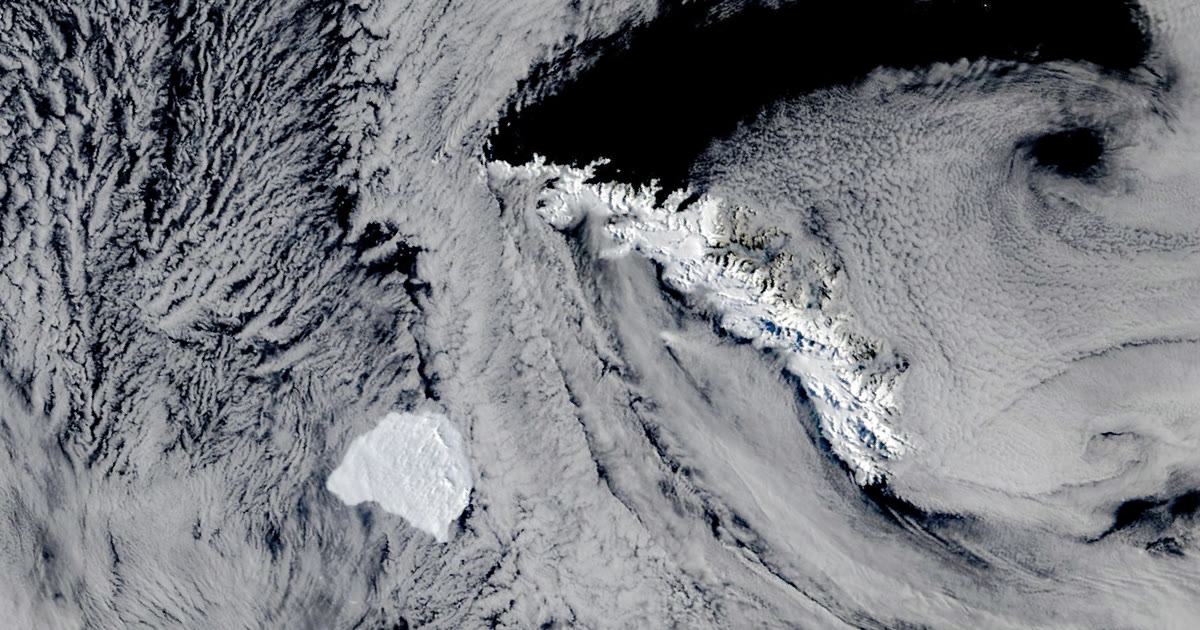
Iceberg A-81, a slab of Antarctic ice the size of a city, slows at the edge of South Georgia
A city-sized iceberg, A-81, has slowed off South Georgia after a 2,300 km drift. What satellites show, why sizes differ, and what is still unknown.

OpenAI says its AI disproved the Exponential Time Hypothesis, and two of the rule's authors will check it
Exponential Time Hypothesis: OpenAI says its AI proved the famous computing rule false. Experts, two of them its authors, are checking. What it means.